Sellafield's £3.6bn Nuclear Clean-Up: What Could It Mean for Dounreay and Caithness?
1st October 2026
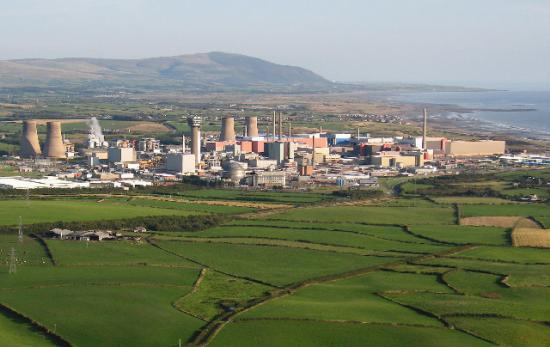
When a £3.6 billion nuclear contract is announced at Sellafield, it would be easy for people in Caithness to regard it as somebody else's business.
Sellafield is in Cumbria, more than 300 miles from Dounreay.
But there is a much closer connection than geography might suggest.
Both sites are dealing with the enormous legacy of Britain's nuclear past. Both require highly specialised engineering and technical skills. And the future of Sellafield is linked directly to some of the material and expertise associated with Dounreay.
The latest announcement therefore raises an interesting question for Caithness.
Could the huge and continuing cost of nuclear decommissioning help provide a future for some of the specialist skills and people developed at Dounreay?
Sellafield Ltd has announced the partners for a new Project and Asset Care Execution framework with a value of up to £3.6 billion. The framework will cover work ranging from smaller asset-care tasks to major and complex projects across the Sellafield site.
But there is an important qualification to that headline figure.
The £3.6 billion is the maximum potential value of the framework. It is not £3.6 billion of guaranteed spending arriving immediately at Sellafield.
The framework is expected to run for nine years, with the possibility of extending it to 15 years. Two principal lots have been awarded subject to the formal completion of the process.
One is going to OneAxiom, a joint venture between Amentum Clean Energy and Mitie, covering process and mechanical handling facilities associated with spent-fuel management and retrievals.
The second is going to HOCHTIEF Infrastructure UK, covering specialist nuclear and decommissioning facilities, including special nuclear materials, nuclear infrastructure and remediation.
This is therefore not simply a construction contract.
It is part of a much bigger and much longer programme of dealing with Britain's nuclear inheritance.
And that is where Dounreay comes into the picture.
Dounreay is still a major employer
It is sometimes easy to think of Dounreay as a site that is simply winding down.
The reality is considerably more complicated.
The latest Dounreay socio-economic review shows that 1,367 people were employed by Dounreay during 2024/25, while around 700 supply-chain workers were also working on the site.
The report describes employment at Dounreay as vital to Caithness and north Sutherland.
The economic impact is considerable. The latest analysis estimates that Dounreay contributes £77.4 million a year in labour-only GVA to the local economy, while its salaries account for around 15% of the total payroll in Caithness and Sutherland.
That means the future of Dounreay is not simply a nuclear-industry issue.
It is a Caithness economic issue.
Behind every Dounreay job is potentially a family, a mortgage, a house, a local shop, a garage, a school place or a business supplying goods and services.
That is why the gradual reduction in Dounreay activity matters so much to the area.
But decommissioning does not mean the work suddenly ends
There is an important misunderstanding about nuclear decommissioning.
Closing a reactor does not mean that the workforce simply disappears.
In many respects, the work changes.
Facilities have to be made safe. Radioactive materials have to be managed. Waste has to be treated and stored. Buildings have to be dismantled. Contaminated areas have to be dealt with. Materials have to be transported and eventually disposed of.
Dounreay is still undertaking major work of exactly this kind.
The NDA's business plan for 2026-29 includes continuing work on spent fuel, nuclear materials, waste management and site decommissioning. It also identifies the removal of Dounreay Fast Reactor breeder fuel and its transfer to interim storage, followed in later years by transporting shipments of that fuel to Sellafield.
So the relationship between the two sites is not merely theoretical.
Some of Dounreay's nuclear legacy will eventually become part of the wider Sellafield story.
There is a bigger nuclear clean-up industry developing
The Sellafield announcement also illustrates something important about the nuclear industry in Britain.
The country is not simply building new nuclear power stations.
It is spending enormous sums dealing with the consequences of nuclear activity that began decades ago.
The Nuclear Decommissioning Authority currently oversees the clean-up of 18 sites, while Nuclear Restoration Services is responsible for safely decommissioning 14 nuclear sites.
Dounreay is part of that national programme.
So is Sellafield.
The scale of the work means that specialist knowledge accumulated at one site can potentially have value elsewhere.
That could become increasingly important as Dounreay's programme develops.
Could Caithness capture more of that opportunity?
This is where the question becomes particularly interesting.
It would be wrong to suggest that Sellafield's £3.6 billion framework automatically means new jobs for Dounreay workers.
It does not.
Sellafield will have its own workforce, contractors and supply chains, and much of the work will necessarily be carried out in Cumbria.
But Britain is going to need a substantial nuclear decommissioning workforce for decades.
Caithness already has one.
The challenge may therefore be how much of the knowledge and experience developed at Dounreay can be retained locally and used for work elsewhere as the site moves through different stages of decommissioning.
That could mean companies in Caithness supplying specialist services outside the area.
It could mean Dounreay employees moving into other nuclear projects without necessarily leaving the region permanently.
It could mean training and apprenticeships designed around skills that will remain valuable beyond the lifetime of individual facilities.
And it could mean Caithness developing a stronger identity as a centre for nuclear decommissioning expertise rather than simply being the location of a site that is gradually closing.
The warning is already there
There is, however, another side to this.
The latest Dounreay figures are impressive, but the direction of travel remains important.
The NDA has previously warned that staffing levels and spending at Dounreay will eventually decline as hazards are reduced and removed. The challenge for Caithness is therefore to prepare for that transition rather than waiting until the reduction in employment becomes unavoidable.
That makes the Sellafield announcement worth watching.
Not because £3.6 billion is about to arrive in Caithness.
It isn't.
But because it demonstrates the scale and longevity of the market for nuclear decommissioning and asset-care expertise.
And Dounreay has decades of experience in precisely that field.
The opportunity is bigger than one contract
There is perhaps a lesson here for Caithness's economic planners.
For generations, Dounreay was associated with nuclear research and fast reactors.
Its future may increasingly be associated with something different.
Nuclear decommissioning itself could become one of the area's long-term areas of expertise.
That does not mean replacing every Dounreay job with another nuclear job.
Caithness needs economic diversification as well.
But if the UK is going to spend billions over many decades dealing with its nuclear legacy, it would make sense for a community that has accumulated highly specialised knowledge to ask how much of that economic activity it can retain.
The Sellafield announcement provides a timely reminder of just how large that potential market is.
For Caithness, the important figure may therefore not be the £3.6 billion.
It may be the 1,367 people already working at Dounreay, the hundreds of people in its supply chain and the specialist knowledge that has been built here over generations.
The question is whether Caithness can turn that knowledge into an economic asset for the next generation.
Because Dounreay may eventually finish its decommissioning mission.
But Britain's nuclear clean-up will not be finishing any time soon.
PHOTO
Simon Ledingham
2005 aerial view looking south toward the Sellafield nuclear nuclear site, Cumbria. The large fell behind is Black Combe.
Creative Commons Attribution Share-alike license 2.0 https://creativecommons.org/licenses/by-sa/2.0
Related Businesses