Wick Town Centre in Transition: High Street Regeneration, Property Sales, and Adaptive Reuse
6th October 2026
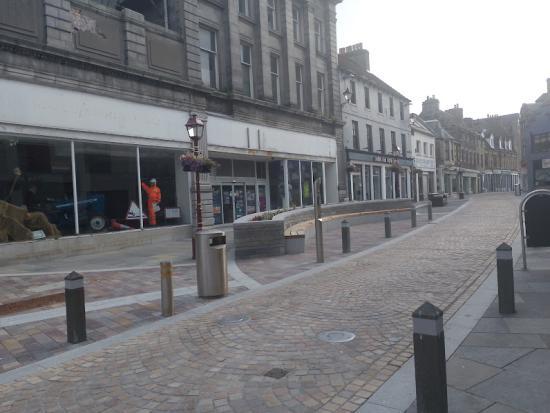
Walk down Wick High Street today, and you’ll find a town center that has emerged from a major public realm overhaul.
With the Caithness flagstone paving completed, updated street layouts in place, and new public seating installed, the physical infrastructure of the street looks fresh, modern, and welcoming.
However, even with the major civil works wrapped up, several commercial spaces, landmark retail units, and iconic local hospitality venues remain vacant or up for sale across High Street, down onto Bridge Street, and into the harbour area.
As Wick redefines its town centre for a post-retail era, here is a comprehensive breakdown of what’s happening with the town’s most notable empty shopfronts and commercial properties.
1. High Street’s Landmark Footprints
82–86 High Street: The Former WoolworthsHistory:
A classic Art Deco building on the High Street, best known to locals as the long-time home of Woolworths and later The Original Factory Shop (TOFS), which closed its doors in August 2018.Current Status: Vacant.
The Outlook: Because of its massive footprint, the site is expensive to maintain as a single traditional retail store. Under town center masterplanning discussions, the focus has shifted toward mixed-use development: sub-dividing the ground floor into smaller "micro-retail" units or community spaces while converting the spacious upper floors into town-center housing or key-worker apartments.
The Former Mackays / M&Co BuildingHistory: A retail staple in Wick for decades, operating under the Mackays banner before transitioning to M&Co. The store permanently closed in March 2023 following the nationwide collapse and liquidation of the chain.Current Status: Vacant.
The Outlook: Situated directly on the newly paved pedestrian zone, the property boasts prime footfall potential. Community groups and local planners see the site as a top candidate for adaptive reuse—either as a boutique commercial hub or a joint private-public housing project if commercial buyers do not take on the full retail footprint.
70–72 High Street (Former Shoe Zone / Retail Unit)Current Status: Vacant / To Let (or For Sale).
Context: Positioned on the mid-stretch of High Street, this unit previously housed high-street shoe and retail chains.The Outlook: Like the larger stores, it faces hurdles with standard retail leases.
However, its mid-sized footprint makes it a strong candidate for independent food and beverage outlets or local traders looking to utilize the new outdoor space right in front of the store.
Corner of High Street & Bridge Street (1 High St / 2 Bridge St)History: Occupying a prominent gateway position at the junction leading towards the river, this prominent corner space previously traded as a pound/discount bargain store (and housed traditional local retail prior to that).
Current Status: Vacant.The Outlook: Sitting right on the corner where the newly laid Caithness flagstones wrap onto Bridge Street, it is highlighted in local regeneration plans as a high-visibility location—ideal for a café, food/drink venue, or boutique retail space that can take advantage of the updated corner pavement.
30 High Street: The Former Dominoes Site
History: A historic site that previously operated as a cinema hall and later housed Dominoes (the independent toy, card, and gift shop). After sitting vacant and decaying for years, the building was declared unsafe and acquired for clearance.Current Status: Demolished (cleared in 2021).
The Outlook: Rather than leaving an empty gap or rebuilding another commercial block, the cleared footprint has been integrated into the town center design. It has been transformed into an open civic plaza/market space, providing flexible room for outdoor markets, street seating, pop-up events, and community gatherings.
2. Down onto Bridge Street & The Lower Town
The commercial vacancy trend extends down Bridge Street—the key thoroughfare connecting High Street to the river crossing and harbor.
36 Bridge Street (Former Cancer Research UK): Situated in a prime spot on Bridge Street, this unit closed as part of Cancer Research UK's nationwide reduction of its retail estate.
Offered for sale (£82,500) or to let (£10,000 p.a.) and eligible for 100% Small Business Rates Relief, it stands as one of the most accessible "starter units" for local startups or office users.
Hugo Ross / Tackle Shop (Lower High Street / Bridge Street Junction):
Formerly trading as Hugo Ross Fishing Tackle, this 1,200 sq ft retail building is listed for sale (offers over £89,500–£99,000). Given its proximity to the river approach, it is actively marketed either for boutique commercial use or potential residential conversion.
Former Bridge Street Free Church (Bridge Street): A massive 6,300 sq ft former church space previously used as a furniture showroom. It stands as one of the largest unique commercial structures available in the center (listed around £155,000), representing a significant redevelopment opportunity for events, arts, or commercial storage.
3. Civic & Public Sector EstateRear of the Police Complex (Old County / Court Buildings): Behind the Bankhead Road area and adjacent to the historic station/court complex sits a substantial set of vacant stone administrative buildings. Under review as part of the public sector estate, these buildings are being evaluated for municipal reuse, key-worker housing, or community-led housing developments rather than commercial retail.
4. Landmark Hotels & Local Pubs in WickBeyond retail spaces, Wick’s hospitality and pub trade is experiencing a significant generational shift. High energy costs and long-serving family owners stepping down have put several iconic local institutions on the commercial market:
Mackays Hotel (Ebenezer Place / Riverfront): Famous for sitting on Ebenezer Place—officially the world’s shortest street in the Guinness World Records—Mackays Hotel was placed on the market after more than 70 years of family ownership by the White family. Listed at a freehold asking price of £1,200,000, this 20-bedroom hotel and bistro remains a central tourism anchor on the NC500 route.
The Crown Bar (High Street): Situated in the heart of the town center right on Market Square, this traditional multi-level pub (for sale around £205,000) features a ground-floor bar, basement cellar, and upper function room/kitchen. Sitting directly on the newly paved pedestrian area, it offers a prime opportunity for a buyer to launch a food-led pub or social hub.
Mountain Dew Bar (26 Smith Terrace): Overlooking Wick Harbour, this historic local pub (listed for sale at offers over £95,000) features a ground-floor bar, commercial kitchen space, an outdoor courtyard/smoking area, and an upper function room with harbor views. It represents an entry-level opportunity for an owner-operator or potential residential redevelopment near the harbor.
5. The Wider Hospitality Landscape Across Caithness & SutherlandThe changes taking place in Wick reflect a broader economic picture across the Far North. While the North Coast 500 (NC500) route continues to bring steady visitor numbers through Caithness and Sutherland, local business owners face a challenging landscape defined by high energy tariffs, rising operational costs, and staffing hurdles.This pressure has created a distinct "buyer's market" across the region, with several prominent hotels, traditional inns, and guest houses changing hands:
Regional Town Hotels: Established properties like the Georgian-era Nethercliffe Hotel in Wick reflect a common trend. Smaller, traditional town-center hotels are increasingly offered at accessible price points (£400,000), appealing to lifestyle buyers or regional operators looking to modernize running costs.North Coast Corridor:
Further along the coastal circuit, high-profile NC500 stops—including the Belgrave Arms in Helmsdale, the Drumbeg Hotel on the west coast, and rural retreats like the Trentham Hotel near Ardgay—have also seen commercial property listings.
The Buyer’s Opportunity: For investors and prospective hoteliers, current asking prices present significant entry opportunities along world-famous tourist routes. However, long-term success increasingly hinges on updating heating systems, adapting to self-catering/boutique models, and managing operational overheads efficiently.
A Town & Region in TransitionWhether observing the completion of Wick’s flagstone streetscape, the adaptive reuse of empty department stores, or the turnover of historic Highland hotels and traditional pubs, the message across Caithness and Sutherland is clear.
The region is stepping away from the traditional high street and hospitality models of past decades. By embracing flexible town-center living, smaller independent retail spaces, and refreshed tourism operations, Wick is quietly laying the groundwork for a far more resilient, community-focused future.