Jackdaw Gas Field: How £800 Million of Investment Turned an Old Discovery into a New Source of British Energy
16th November 2026
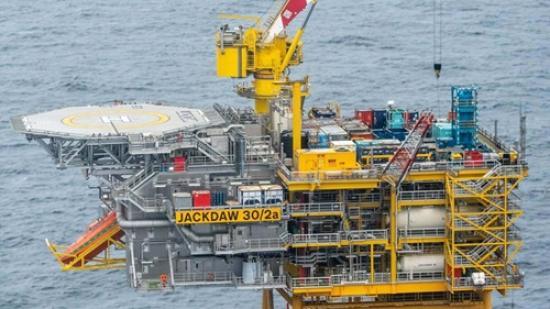
The Jackdaw gas field in the North Sea is beginning to supply gas to Britain, marking an important milestone for the country's domestic energy industry. What makes the development particularly interesting is how quickly it has moved towards production following its latest government approval.
The gas began flowing today.
The answer, however, is that the project was not built in a matter of weeks. Most of the difficult, expensive and time-consuming engineering work had already been completed. The latest approval removed the final regulatory obstacle to starting production.
Jackdaw is a reminder that offshore energy projects can take many years to develop, but that existing infrastructure and substantial investment can make a considerable difference once the final permission is obtained.
A discovery with a long history
Jackdaw is a high-pressure, high-temperature gas-condensate field in the Central North Sea, approximately 250 kilometres east of Aberdeen and close to the UK-Norway maritime boundary.
It is operated by Adura, the joint venture involving Shell and Equinor. The development consists of an offshore wellhead platform and four production wells.
The gas is not processed on a completely new installation. Instead, it travels through a 31-kilometre subsea pipeline to the existing Shearwater platform, where it is processed before being exported to the British mainland.
This connection to existing infrastructure is an important part of the economics. Building an entirely new processing installation, together with all the supporting facilities, would have added considerably to the cost and development time.
More than £800 million already invested
The scale of the work explains why production can begin so soon after the latest approval.
The original regulatory consent was granted in June 2022. Construction and development work began shortly afterwards.
The main stages included installation of the platform's steel support structure, offshore pipeline construction, drilling four wells and preparing the existing Shearwater installation to handle the additional gas.
The pipeline was laid in July 2024. The offshore platform's topsides were installed in October 2025, and drilling of the four production wells was completed in February 2026.
By January 2025, Shell had already reported spending more than £800 million on the project.
That investment continued to have a purpose even while the legal and environmental questions surrounding the original approval were being resolved.
In other words, the project was largely built before the final permission to produce gas was obtained.
Why was approval delayed?
Jackdaw's progress was interrupted by a legal challenge.
In 2024, the UK Supreme Court's ruling in the Finch case established that environmental assessments for fossil fuel developments must consider the emissions produced when the extracted oil and gas are eventually burned.
Greenpeace and Uplift subsequently challenged the original Jackdaw approval.
In January 2025, the Scottish Court of Session ruled that the original consent could not stand because the assessment had not properly considered these downstream emissions.
However, the court allowed construction work to continue while the developer sought fresh approval.
This was significant. Rather than abandoning the project or leaving expensive infrastructure unfinished, the developer was able to continue with the engineering work while the regulatory process was repeated.
The government subsequently considered additional environmental information and public representations before reaching a new decision.
On 14 October 2026, the Energy Secretary agreed that consent could be granted. The North Sea Transition Authority formally granted consent on 21 October.
The final regulatory hurdle had been cleared.
PHOTO
Jackdaw platform from Adura