Grand Theft Auto: The Billion-Dollar Business Built on Crime, Gaming and Virtual Money
19th November 2026
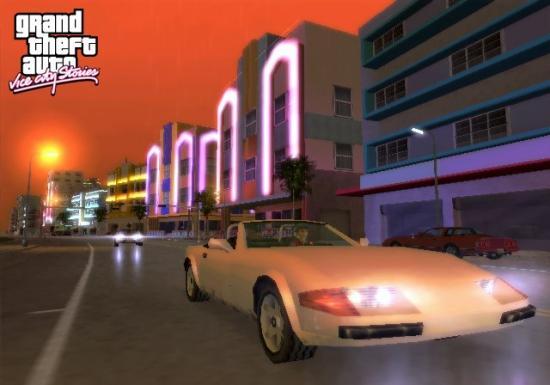
As Grand Theft Auto prepares for its next major release, the extraordinary success of the franchise raises questions about the modern gaming industry, the money players spend and the controversial content that has made it one of the world's biggest entertainment businesses.
For anyone who remembers the early days of computer games, the transformation of the industry has been remarkable. What once involved relatively simple graphics and basic gameplay has developed into a global entertainment business worth billions.
Few examples illustrate that transformation better than Grand Theft Auto, usually known as GTA.
The original game appeared in 1997. Its basic concept was already controversial. Players were given the freedom to drive around a city, steal vehicles and undertake criminal activities. What followed was a series of increasingly sophisticated games which eventually turned the name Grand Theft Auto into one of the most valuable brands in the entertainment industry.
The latest instalment, Grand Theft Auto VI, is scheduled for release on 19 November 2026. The anticipation is enormous, with the company reporting unprecedented levels of pre-orders.
But the real story is not simply the launch of another video game. It is the extraordinary commercial machine that has developed around it.
A franchise with almost half a billion sales
The figures are staggering.
The Grand Theft Auto franchise has sold more than 475 million units worldwide. Its best-known instalment, GTA V, released in September 2013, has sold more than 230 million copies.
That makes it one of the most successful individual entertainment products ever produced.
Take-Two Interactive, the American company which owns Rockstar Games, the developer behind GTA, reported net revenue of $6.66 billion for its 2026 financial year. The GTA series is one of its principal contributors.
The company has also reported that GTA V reached $1 billion in retail sales faster than any other entertainment release in history.
This is no longer simply a business selling computer games. It is an international entertainment operation with a customer base running into hundreds of millions.
The clever business model: making money long after the sale
Perhaps the most interesting aspect of GTA is how the company continues making money years after a customer has purchased the original game.
GTA Online allows players to enter a shared virtual world where they can acquire vehicles, properties, weapons and other possessions. Players can earn virtual money through activities within the game, but they can also purchase virtual currency using real money.
This creates a continuing revenue stream.
A traditional computer game might generate most of its income when it is first purchased. GTA has developed something considerably more lucrative. Once players become involved in its online world, there are repeated opportunities to encourage further spending.
The wider Take-Two business illustrates just how important this model has become.
In its 2026 financial year, recurrent consumer spending accounted for 78% of its total net revenue, equivalent to approximately $5.2 billion. This includes virtual currency, additional content and in-game purchases across its entire portfolio of games, not just GTA.
In its latest reported quarter, covering the three months to September 2026, that proportion had risen to 81%.
The business model is therefore changing. Selling the game is only the beginning. Keeping players engaged and encouraging them to spend money over months and years is increasingly where the money is made.
Why are people prepared to spend so much money?
Part of the answer lies in the way the games are designed.
Players can build up virtual wealth, acquire expensive cars, buy properties and develop their standing within the online community. There is a social element too. Friends can play together, compete and show off what they have acquired.
This creates a powerful incentive to keep playing.
There is also a commercial psychology at work. Once someone has invested hundreds of hours in a game, they may be reluctant to abandon the progress they have made. Spending a little more money to acquire something desirable can seem relatively insignificant.
But millions of small purchases can become a substantial income stream for the company.
This is an increasingly important feature of the gaming industry, and not one confined to GTA. Mobile games, sports games and many other titles use similar methods.
The controversy: what exactly are players doing?
The commercial success of GTA has always been accompanied by controversy over its content.
The games are designed for adults and carry a PEGI 18 classification. They contain graphic violence, murder, robbery, drug use, sexual material, nudity and extensive offensive language.
Players are not simply watching a crime drama. They actively participate in the criminal activities.
The distinction is important. In a conventional film, the audience watches events unfold. In GTA, players make decisions about what their characters do.
Critics have questioned whether repeatedly participating in simulated violence can influence attitudes towards crime, aggression and other behaviour.
However, it is important to distinguish concerns from proven effects. Research into violent video games has not established that playing them inevitably makes someone violent or leads them to commit crimes. The relationship between gaming, individual behaviour and wider social influences is complicated.
There are also concerns about the online environment. Players can interact with strangers, encounter abusive behaviour and potentially be exposed to inappropriate conversations.
For parents, the age classification is particularly important. GTA is not intended for children, even though younger players may be attracted to it because of its popularity.
The gambling and spending question
Another issue deserves attention.
Many modern games encourage players to spend money on virtual currency, additional content and desirable items. Some games also use randomised reward systems, where players pay for a chance to obtain particular virtual items.
These systems have attracted criticism because they can resemble aspects of gambling, particularly when younger players are involved.
GTA Online has its own virtual economy, with players able to purchase in-game currency known as Shark Cards.
The question is whether players fully appreciate how much they are spending and whether the design of these systems encourages excessive purchases.
For the company, recurring spending is an attractive business model. For some customers, however, it can become an expensive habit.
GTA VI: another commercial jackpot?
The next instalment is expected to take the franchise to another level.
GTA VI returns players to Vice City, a fictionalised version of Miami, and introduces two central characters, Jason and Lucia.
The game has been years in development, involving substantial investment in technology, graphics, programming, storytelling and production.
Take-Two has indicated that the launch could make 2027 a historic year for the company. Its latest financial outlook anticipates net bookings of between $8 billion and $8.2 billion for its 2027 financial year.
That is a remarkable target for a company whose success is heavily dependent on a relatively small number of major entertainment franchises.
There is also an important question about the future. Can the company maintain the extraordinary interest in GTA for another decade, or will changing tastes, competition and concerns about the cost of gaming eventually affect demand?
A remarkable business, but what does it say about society?
There is no denying the commercial achievement.
A game first released in 1997 has developed into a franchise with more than 475 million sales. Its latest major instalment is attracting enormous advance interest before it has even reached shops.
The business model is particularly impressive. Instead of relying entirely on selling new games, the company has created a virtual environment in which customers can continue spending money long after their original purchase.
But there is another side to the story.
We live in a society where governments, schools and parents are increasingly concerned about the influence of digital entertainment, online behaviour and the amount of time young people spend in virtual worlds.
Yet one of the most commercially successful entertainment products in the world is built around simulated criminal activity, violence and the acquisition of virtual wealth.
That does not mean that everyone who plays GTA approves of criminal behaviour. Nor does it mean that the game should automatically be condemned. Adults are perfectly capable of distinguishing fiction from reality.
Nevertheless, it is reasonable to ask whether the gaming industry's commercial incentives always coincide with the interests of its customers.
The extraordinary success of Grand Theft Auto demonstrates the power of modern digital entertainment. It also illustrates how companies have found ways to turn customer engagement into an almost continuous source of income.
Perhaps the biggest lesson is that the gaming industry is no longer simply selling entertainment. It is selling an ongoing experience, and increasingly finding ways to charge customers for remaining part of it.