Have We Become Too Accustomed to Heating Our Homes? What Previous Generations Can Teach Us About Keeping Warm
25th November 2026
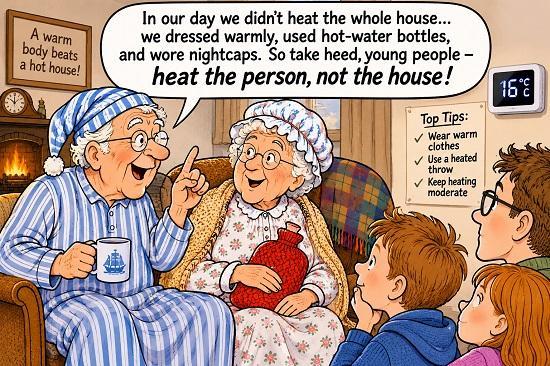
With household energy bills continuing to put pressure on family budgets, perhaps it is time to look back a few generations and reconsider how we keep ourselves warm.
Our grandparents and great-grandparents lived very differently. Many homes had little or no central heating. Coal fires provided warmth in the main living room, while bedrooms and other parts of the house could be distinctly cold. Yet people developed ways of keeping comfortable without heating every room.
Men and women commonly wore long nightshirts and nightdresses, sometimes accompanied by nightcaps to keep their heads warm. Beds were piled with blankets, eiderdowns and quilts. Hot-water bottles were commonplace, often placed in beds before bedtime to take the chill off the sheets.
During the day, dressing gowns, slippers, thick socks and extra layers of clothing were normal. People learned to dress for the temperature rather than expect the temperature to change to suit them.
Today, things are rather different. Central heating, double glazing and better insulation have transformed our homes. Many households expect living rooms to remain at 20–22°C, with bedrooms and other rooms also kept reasonably warm. We have become accustomed to heating the air around us rather than concentrating on keeping our bodies warm.
But with energy prices remaining high, is there something we can learn from earlier generations?
Heat the person, not necessarily the whole house
Modern technology offers opportunities that previous generations could only have imagined.
Electrically heated throws and blankets can provide direct warmth at a fraction of the cost of heating an entire room. A typical 150-watt heated throw costs around four pence an hour to operate at an electricity price of 25p per unit. Used for eight hours, that is approximately 30p.
Compare that with a 2kW electric fan heater, which could cost around 50p an hour if running continuously at the same electricity price.
Thermostatically controlled heaters also allow households to maintain a lower background temperature, switching on only when the temperature falls below the chosen setting.
Combining these technologies with warm clothing, slippers and suitable bedding could offer substantial savings.
We should not romanticise the past
There is, however, an important qualification. Previous generations often endured homes that were too cold, damp and poorly insulated. Respiratory illnesses and other health problems were common, and being cold was not necessarily a lifestyle choice.
The World Health Organization recommends 18°C as a generally safe minimum indoor temperature during cold weather. Older people and those with certain health conditions may need warmer surroundings.
Feeling comfortable under a heated blanket does not necessarily mean that prolonged exposure to a very cold room is harmless.
Nor should households allow unused rooms to become so cold that condensation, mould and damp become problems.
The objective should be to reduce unnecessary heating, not to return to the unhealthy living conditions of the past.
A different approach to household energy
Perhaps the answer lies somewhere between the habits of previous generations and the expectations of modern living.
Better insulation, draught-proofing and efficient heating systems can reduce the amount of energy needed. Heated throws, electric blankets and warmer clothing can provide additional personal warmth, while thermostats can prevent rooms becoming unnecessarily hot.
There is also a question about whether we really need to heat every room to the same temperature throughout the day.
For households struggling with energy bills, particularly pensioners and people on fixed incomes, changing some everyday habits could make a difference.
Our grandparents did not have the technology available today, but they understood something that we may have forgotten: keeping warm does not always mean heating the entire house.
Perhaps it is time to rediscover that lesson, while retaining the insulation, comfort and health standards that modern living has brought us.
We may not need to bring back the nightcap, but perhaps we should not be so quick to dismiss the wisdom behind it.