Scotland's Peatlands: The Hidden Carbon Treasure Beneath Our Feet – Why Protecting the Highlands' Peat Could Be Vital to Tackling Climate Change
Submitted by Bill Fernie
28th November 2026
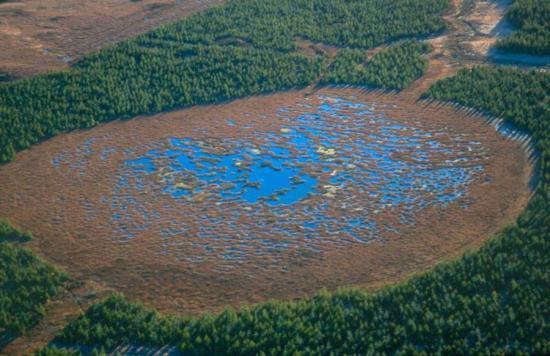
Peat is something most people in the Highlands and Islands see regularly without giving it much thought. It forms part of the landscape across Caithness, Sutherland and much of the north of Scotland. But beneath the rough grasses, heather and boggy ground lies something of enormous environmental importance.
Scotland's peatlands are one of its greatest natural stores of carbon. They have been accumulating for thousands of years, locking away carbon from the atmosphere in layers of partially decomposed vegetation. However, when peatlands are damaged through drainage, forestry, agricultural activity, extraction or development, that stored carbon can be released back into the atmosphere.
New Scottish Government statistics, published on 27 November 2026, provide an updated picture of the extent of Scotland's peatlands, their condition, the amount of carbon they store and the progress being made to restore damaged areas.
The findings make interesting reading, particularly for the Highlands, which has the largest share of Scotland's degraded peat soils and is also leading the country in restoration activity.
Scotland's enormous natural carbon store
The Scottish Government estimates that Scotland has around two million hectares of peat soils, covering approximately a quarter of the country's land area.
But the figures depend considerably on how peatland is defined. If shallower peaty soils are included, the area becomes much larger. Estimates suggest that peatland in its broader sense could cover between 55% and 64% of Scotland.
That is a remarkable proportion of the country.
The importance of these landscapes goes well beyond their appearance. Scotland's peat soils are estimated to store around two billion tonnes of carbon.
To put that into perspective, the Scottish Government says this is equivalent to approximately seven billion tonnes of carbon dioxide. That is considerably more than the carbon stock held in all the forests of the United Kingdom combined.
It is an extraordinary natural resource, built up over thousands of years.
Peat forms in waterlogged conditions where there is insufficient oxygen for dead vegetation to decompose fully. Rather than disappearing, the plant material gradually accumulates, forming layers of peat.
The process is extremely slow. In some places, peat has accumulated over thousands of years, which means that damaging an established peatland can release carbon that has been stored for generations.
The problem: much of Scotland's peat is damaged
The most concerning finding is the condition of Scotland's peat soils.
Healthy peatlands remain wet, allowing peat-forming vegetation to survive and continue accumulating organic material. When the water table falls, oxygen enters the peat and decomposition increases, releasing greenhouse gases.
Drainage, forestry planting, cultivation, overgrazing, peat extraction and some forms of development can all contribute to deterioration.
Using figures from the UK Greenhouse Gas Inventory, the Scottish Government estimates that around 72% of Scotland's peat soils were degraded in 2024.
There has been some improvement. The estimated proportion classified as degraded was around 75% in 1990.
However, a reduction of just three percentage points over more than three decades demonstrates the scale of the challenge.
The Scottish Government also acknowledges that evidence of continuing degradation is less complete than evidence of rewetting and restoration. This is important when interpreting the figures because the statistics may provide a more complete picture of improvements than of continuing damage.
Peat is contributing significantly to Scotland's emissions
Perhaps the most striking statistic concerns greenhouse gas emissions.
Scotland's peat soils were estimated to have produced around 6.2 million tonnes of carbon dioxide equivalent emissions in 2024.
That represents approximately 16% of Scotland's total net greenhouse gas emissions.
It is also more than the emissions attributed to industry.
Emissions have fallen from approximately 8.5 million tonnes in 1990 to 6.2 million tonnes in 2024. However, the Scottish Government's analysis suggests that much of this reduction is attributable to forestry and land-use changes, rather than peatland restoration alone.
Rewetting peatlands has contributed to the improvement, but the estimated contribution is relatively modest so far.
This puts peatland restoration into perspective. Scotland cannot achieve its climate ambitions simply by building more wind turbines and changing how electricity is generated. It also has to deal with emissions coming from the land itself.
The Highlands are at the centre of the restoration effort
For people in Caithness and Sutherland, the statistics have particular relevance.
The Highland Council area accounts for the largest share of Scotland's degraded peat soils, but it is also responsible for the largest share of restoration activity.
The Scottish Government's figures show that Highland has been well ahead of other local authority areas in the amount of peatland restoration undertaken.
Annual restoration activity in Highland reached around 8,000 hectares in 2024-25.
This is part of a much wider national programme.
Peatland ACTION, the national restoration programme, estimates that around 82,000 hectares of peatland have been put on the road to recovery between 2012-13 and 2025-26.
The programme's annual restoration activity has increased considerably, reaching approximately 15,000 hectares nationally in each of the last two reporting years.
That is encouraging progress, although restoration does not necessarily mean that a peatland has immediately returned to its original condition. It means work has been undertaken to put it on a path towards recovery.
What does restoring peat actually involve?
Restoring peatland is not simply a matter of planting trees or vegetation.
In many cases, the first priority is to restore the waterlogged conditions that allow peat to survive.
This can involve blocking artificial drainage channels, slowing water movement and preventing further erosion.
On damaged areas, bare peat may need to be stabilised and vegetation encouraged to return.
Some restoration projects also involve removing trees where forestry planting has damaged valuable peatland habitats.
It is a different approach to the conventional idea that planting more trees is always the best environmental solution.
Trees have an important role in capturing carbon, but planting them on deep peat can have the opposite effect if the underlying peat is drained and damaged.
The objective is to protect the carbon already stored in the ground, rather than release it in an attempt to create another carbon-capturing landscape.
How reliable are the figures?
One interesting aspect of the new Scottish Government publication is that it is unusually open about the limitations of the statistics.
The figures bring together several different datasets, including the UK Greenhouse Gas Inventory and information from Peatland ACTION.
Some estimates of peatland condition and changes over time are modelled rather than based on repeated physical surveys of every site.
The Government describes these as indicative national estimates, rather than direct observations of ecological recovery.
There are also differences between the way restoration activity is recorded by Peatland ACTION and the way rewetting is accounted for in the greenhouse gas inventory. They measure different things and should not be compared as though they were identical.
Even the estimated area of peat soils varies substantially between datasets, with recent estimates ranging from 1.2 million to 2.4 million hectares.
These uncertainties do not undermine the importance of the findings. They do, however, remind us that measuring a landscape as varied and extensive as Scotland's peatlands is a complicated exercise.
A natural asset that deserves greater attention
Peatlands rarely receive the same attention as wind farms, electricity networks, battery storage projects or other developments associated with Scotland's energy transition.
Yet their contribution to tackling climate change could be substantial.
There are also wider benefits. Healthy peatlands support wildlife, help maintain water quality and influence how water moves through catchments. They can therefore contribute to biodiversity, the management of flooding and the protection of water supplies.
For the Highlands, peatland restoration also represents an opportunity to develop specialist environmental skills and employment in rural areas.
The challenge is making sure that restoration funding is sustained and that the work is properly monitored over many years.
Peat takes thousands of years to form. It cannot be replaced quickly if it is damaged or destroyed.
Scotland has spent considerable time discussing how to reduce emissions from transport, heating, electricity generation and industry. The latest figures demonstrate that the land beneath our feet deserves an equally important place in that discussion.
For Caithness and Sutherland, where peat is such a familiar feature of the landscape, the message is particularly relevant.
What might look like unproductive, wet and rather bleak ground is actually one of the most valuable natural assets Scotland possesses.
Protecting it may prove just as important to Scotland's environmental future as many of the much more visible projects currently attracting attention.
Scottish Government Official Statistics on Scotland's Peatlands 2026
Official Statistics on Scotland's Peatlands 2026 Methodology Report