Highland's Lost Industrial Ambitions – The Factories, Investment and Thousands of Jobs That Never Materialised
29th November 2026
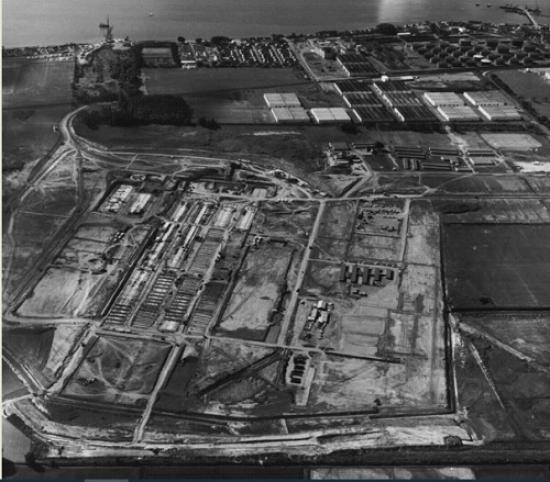
The Highlands have never lacked ambitious economic development plans. Over several decades, governments, development agencies and private companies have announced major industrial investments promising hundreds or even thousands of jobs.
Some projects were built and operated for many years before eventually closing. Others never progressed beyond planning and investment announcements. Some industrial sites have since been revived, although often with different industries and employment levels from those originally promised.
The history raises an important question: why has the Highlands repeatedly struggled to turn major investment announcements into lasting industrial employment?
The story is not simply one of failed projects. It is also about changing markets, the economics of operating in remote locations, government decisions, energy costs and the difficulty of replacing major employers once they disappear.
Forscot: The £1.2 billion timber project that never happened
One of the most ambitious proposals was the Forscot development at Delny, near Invergordon.
Plans emerged in 2004 for an integrated timber-processing complex incorporating a pulp mill and sawmill. The proposal was intended to make much greater use of Scottish forestry timber and produce materials that otherwise had to be imported.
The investment was estimated at approximately £1.2 billion, with around 500 permanent jobs and several thousand construction jobs anticipated.
It attracted considerable attention because it offered the prospect of establishing a major new industrial sector in the Highlands.
However, the project struggled to secure the necessary finance and faced questions about the availability of sufficient timber supplies and its commercial viability.
By 2008, the original development had been abandoned.
The site never became the major timber-processing complex originally envisaged, and the promised permanent employment never materialised.
Invergordon: The aluminium industry that disappeared
The history of Invergordon provides an earlier example of how a major industrial development can transform an area and then leave a substantial economic gap.
The British Aluminium smelter was developed during the late 1960s and began production in 1971.
It was a major industrial undertaking, requiring large quantities of electricity and imported raw materials. At its peak it employed approximately 1,000 people directly.
However, the economics of operating the plant became increasingly difficult. Electricity costs and the company's wider financial position became major problems.
The smelter closed at the end of 1981, resulting in the loss of approximately 890 jobs.
The closure was debated in the House of Commons in January 1982. The Government explored finding another operator, but by July it confirmed that no buyer had come forward despite considerable efforts.
The Government promised additional assistance of up to £10 million over three years to help the Highlands and Islands Development Board attract replacement employment. An enterprise zone was also established in the Invergordon area.
The closure demonstrated the vulnerability of a local economy heavily dependent on one major employer.
Invergordon subsequently developed other industries, including whisky production, oil-related activity and port operations, but the original aluminium industry was never restored.
Corpach: Two chapters in the decline of Highland paper production
Corpach, near Fort William, became another important centre of industrial development.
A major pulp and paper operation was established there during the 1960s as part of the post-war drive to develop new industries in the Highlands.
The original pulping operations closed in 1981, marking another significant loss of industrial activity.
Paper production subsequently continued at the site under Arjo Wiggins, but this operation also eventually closed.
In September 2005, the company announced the closure of the Corpach Paper Mill, with the loss of approximately 126 jobs.
The market for the specialist paper produced at the plant had been undermined by the growth of electronic payments and the decline in demand for traditional paper products.
Corpach illustrates how an industry can survive an initial setback but still face longer-term changes in technology and markets that make continued production uneconomic.
It also demonstrates the difficulty of replacing specialist manufacturing employment in smaller Highland communities.
Nigg: From one of the world's major oil fabrication yards to a new energy industry
The Nigg fabrication yard on the Cromarty Firth became one of the most important industrial sites in the Highlands during the North Sea oil boom.
Established in the early 1970s, it manufactured major offshore structures and employed approximately 5,500 people at peak activity, with substantial additional employment in supporting businesses.
However, the decline in demand for offshore fabrication work during 1999 and 2000 resulted in a dramatic contraction.
The closure of Nigg and Ardersier together removed around 5,000 jobs and an estimated £100 million a year in related economic expenditure from the Inner Moray Firth economy.
Nigg was not abandoned permanently.
In 2011, Global Energy Group acquired the site and announced plans to transform it into a modern energy park serving oil and gas, offshore renewables and other energy industries.
The announcement included an ambition to create around 2,000 jobs by 2015, supported by £1.8 million of public funding through Highlands and Islands Enterprise.
The redevelopment represented a genuine attempt to restore industrial activity to a major site.
Nigg has since become an important energy fabrication and port facility, but it is worth examining how the original employment ambitions compared with the jobs actually created.
The important point is that the revival of a site does not necessarily mean the restoration of its former employment levels.
Ardersier: Another oil industry giant seeking a new future
Ardersier, near Nairn, was another major offshore fabrication yard.
At its height, it employed more than 3,000 people, constructing large offshore platforms for the oil industry.
The yard finally closed in 2002 after demand for fixed offshore platforms declined.
The loss was particularly significant because Nigg and Ardersier had provided a substantial concentration of skilled engineering and fabrication employment in the Inner Moray Firth.
For many years the site remained largely unused.
More recently, it has attracted new investment and has been redeveloped as Ardersier Port, with ambitions to support offshore wind manufacturing, assembly and other energy-related activities.
The proposed £1.5 billion Mingyang wind turbine manufacturing investment, which could have created around 1,500 jobs, appeared to offer another major opportunity.
However, the UK Government rejected the proposal in 2026, citing national security concerns.
The story took another turn in November 2026 when the port's owners announced that they were seeking a suitable new owner.
The port continues to operate, and its long-term potential remains significant, but the Mingyang factory proposal has not proceeded.
Ardersier is therefore an example of a former industrial site that has attracted successive attempts at regeneration, with the latest major investment opportunity failing to materialise.
Dounreay: A successful scientific programme followed by a long transition
Dounreay in Caithness is a slightly different example and should not be described as a failed industrial project.
The nuclear establishment opened in 1955 to develop fast breeder reactor technology.
It transformed the local economy, helping Thurso grow substantially and creating skilled employment, new housing, schools and supporting businesses.
Three reactors were constructed and operated, including the Prototype Fast Reactor.
In 1988, the Government announced that the fast reactor programme would end in 1994.
The research programme had achieved important scientific objectives, but the Government no longer considered fast reactor technology to have a viable short-term commercial future.
The end of the programme brought a major change in the nature of employment at the site.
Instead of developing new reactors, the focus moved towards decommissioning, environmental restoration and managing nuclear materials.
This created a different long-term employment programme, which has itself become a major industrial activity in Caithness.
Dounreay is an important reminder that the end of one industrial mission does not necessarily mean the end of employment, provided there is another substantial programme to follow it.
It also highlights the challenge facing Caithness as decommissioning eventually progresses towards completion.
Smaller projects that also failed to proceed
Not all abandoned developments involved major factories.
The Inverness and Highland City-Region Deal included a digital connectivity project with approximately £20 million allocated to it. After years of development, the original proposal was discontinued and funding redirected towards the Corran Ferry infrastructure.
The proposed Fort William Tailrace white-water kayaking facility is another example. It was intended to create an additional sporting and tourism attraction, but the proposal stalled and was subsequently removed from the active Fort William 2040 masterplan.
The Inverness Longman Junction improvement scheme also illustrates the difficulties of delivering major infrastructure.
Its original City-Region Deal funding commitment was replaced by funding for the Corran Ferry. However, the Longman scheme has not been permanently abandoned and remains in the wider transport planning process.
These examples are smaller than the major industrial projects, but they demonstrate that the gap between a proposal and its eventual delivery is not confined to private industry.
What does this history tell us?
There are some common themes running through these developments.
First, major employers can become extremely important to local economies, but that dependence also creates vulnerability. When an industry changes or a company closes, the effects extend well beyond the workers directly employed.
Secondly, the economics of Highland manufacturing can be difficult. Transport costs, energy prices, distance from major markets, access to skilled labour and international competition all influence whether an industrial development can remain commercially viable.
Thirdly, government support and public investment can help attract businesses, but they cannot guarantee that a commercial operation will survive.
Finally, the Highlands have often been promised replacement industries following major closures. Some have succeeded, but others have failed to deliver the employment originally anticipated.
The next generation of investment promises
The Highlands are once again being presented with substantial economic opportunities.
Offshore wind, pumped storage hydro, battery storage, electricity transmission, data centres, ports and the wider energy transition could bring significant investment.
There are genuine opportunities, but the experience of earlier generations suggests that announcements must be examined carefully.
A proposed investment figure is not the same as money committed. Construction employment is not the same as permanent jobs. A planning permission is not a completed factory, and a completed facility does not automatically guarantee long-term commercial success.
The proposed £2 billion Highland Council capital programme also needs to be judged by what is actually funded, built and delivered rather than the headline figure alone.
A lesson from Highland economic history
The history of Forscot, Invergordon, Corpach, Nigg, Ardersier and Dounreay is not one simple story of failure.
Some projects created important industries and supported communities for decades. Some closed because of changing technology or international economics. Others were never built, despite considerable publicity and expectations.
But they all raise a question that remains relevant today.
How much of the investment announced for the Highlands actually becomes lasting employment, and how much remains an opportunity that never quite arrives?
The Highlands need investment, industry and skilled jobs. Communities should welcome credible proposals and support development.
But they are also entitled to ask difficult questions, demand realistic employment forecasts and expect regular reporting on progress.
Economic development should ultimately be measured by what is delivered, how many lasting jobs are created and whether the benefits remain in the communities that were promised them.
Fort William: A Highland Industrial Success Story That Has Survived for Nearly a Century
Not every Highland industrial story has ended in disappointment. Fort William provides an important example of a major manufacturing operation that has survived changing economic conditions, ownership changes and repeated challenges over nearly a century.
The Lochaber Aluminium Works began production in 1929, following the development of an ambitious hydroelectric scheme designed to provide the enormous quantities of electricity required for aluminium production.
The connection between cheap, reliable electricity and aluminium manufacturing was central to the original investment. Aluminium production is extremely energy-intensive, making the availability of hydroelectric power from the surrounding landscape a major advantage.
The smelter became an important employer in the West Highlands, providing skilled industrial jobs and supporting businesses and families in the wider Fort William area.
It also demonstrated that major manufacturing was possible in a relatively remote part of Scotland when local resources, infrastructure and industrial investment could be brought together.
A business that nearly disappeared
The future of the operation came under serious pressure in 2016 when Rio Tinto reviewed its Lochaber business.
There were concerns about the future of the smelter and the employment it supported. The Scottish Government became involved in securing a new ownership arrangement that would retain both the aluminium works and the associated hydroelectric assets.
The eventual sale to GFG Alliance helped secure the future of the operation.
The Scottish Government also entered into a long-term electricity arrangement intended to provide greater certainty over power supplies and support the continued operation of the plant.
This was an important intervention because the smelter's survival was not simply a matter of retaining an industrial building. It meant preserving an established manufacturing operation, specialist skills and an important part of the Highland industrial economy.
Why the Fort William example matters
The Lochaber works is now the UK's last remaining primary aluminium smelter.
Its continued operation demonstrates the importance of having a secure and competitive energy supply for energy-intensive manufacturing.
It also provides a useful contrast with the abandoned industrial proposals examined in this article.
The Highlands have natural resources, land, ports, engineering skills and considerable renewable energy potential. But these advantages do not automatically translate into successful businesses.
The Fort William experience shows what can be achieved when industrial infrastructure, energy supply, investment and long-term commitment come together.
There have also been attempts to expand aluminium manufacturing around the existing operation. A proposed alloy wheel factory, involving an investment of around £130 million, was subsequently dropped in favour of a different aluminium recycling and casting proposal.
That additional development did not proceed as originally envisaged, but it demonstrates the continuing interest in building further manufacturing activity around the existing industrial base.
The lesson from Fort William is perhaps as important as the lessons from the projects that never happened.
The Highlands do not simply need more announcements of major investment. They need businesses that can operate competitively, provide secure employment and remain part of the local economy for decades.
The Lochaber Aluminium Works has done that for almost 100 years. It is an industrial success story worth recognising.
PHOTO
Smelter Invrgordon
www.theinvergordonarchive.org/
Links to follow up for more information
1. House of Commons – Invergordon smelter closure, 18 January 1982
https://api.parliament.uk/historic-hansard/commons/1982/jan/18/invergordon-smelter
2. Highland Council – Inner Moray Firth Ports and Sites Strategy
https://www.highland.gov.uk/download/downloads/id/1041/inner_moray_firth_ports_and_sites
3. Nigg purchase and 2,000-job ambition, 2011 – HIE Energy
https://www.hi-energy.org.uk/Default.aspx.LocID-00tnew09e.RefLocID-00t007008.Lang-EN.html
4. Ardersier Port seeking a new owner, November 2026 – Press and Journal
https://www.pressandjournal.co.uk/fp/news/7159707/ardersier-port-listed-for-sale/
5. Eurofound – Corpach Paper Mill closure
https://apps.eurofound.europa.eu/restructuring-events/detail/62179