The UK Housing Market and the Economy - A Delicate Balance
1st January 2026
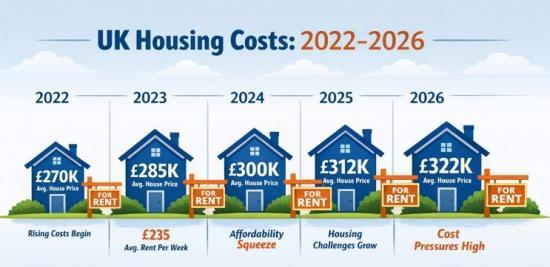
The UK housing market plays a crucial role in the overall health of the national economy.
It influences household wealth, consumer spending, labour mobility, and financial stability. In recent years, trends in house prices, rents, and affordability have shaped economic outcomes for individuals and the country as a whole.
Understanding how these elements interact is key to judging both the current state of the market and the risks ahead.
The Current State: Prices, Rents and Market Dynamics
In 2025 and into 2026, the UK housing market has shown a mixed picture. House prices continue to rise modestly in many parts of the country, though overall growth has slowed compared with the rapid increases of earlier years. Average UK house prices are forecast to grow in the mid-single digits annually over the next couple of years, with regional variation. Cities in the North and parts of Scotland are seeing stronger rises, while London's housing market has softened somewhat.
At the same time, rental costs in the private sector remain high, continuing to grow well above general inflation. Average private rents have been rising year on year, reflecting persistent demand and supply imbalance. This snapshot highlights a market that is still expanding, but at a slower pace and with strong regional variation — a factor that shapes both local economies and national patterns.
Is the Market Sustainable or Approaching a Bubble?
Questions about a housing "bubble" have circulated for years in the UK. A bubble implies rapid price increases driven more by speculation and easy credit than by fundamentals like earnings or population growth. The recent slowdown in price growth and modest forecasts for the next few years temper fears of an imminent crash. Price growth is expected to remain moderate, supported by gradual interest rate reductions and improved affordability.
However, the sustainability of the market depends on several factors. High overall debt levels, dependence on buy-to-let investment, and structural supply shortages all heighten risk. Analysts have argued that the UK housing sector can feel at times like a dynamic where debt and rising prices reinforce each other and exclude many buyers. While the current outlook is not one of immediate collapse, vulnerabilities remain — particularly if economic growth slows, interest rates rise again, or lending standards tighten.
Affordability Challenges for Buyers and Renters
One of the most pressing consequences of recent housing trends is affordability, especially for first-time buyers and tenants in the private rented sector.
For would-be homeowners, even modest price growth means that houses remain expensive relative to earnings. Rising mortgage costs and historically high borrowing levels mean that the average first-time buyer must stretch finances to unprecedented levels.
Renters face an even starker affordability challenge. The private rental market has seen substantial increases, far outpacing wage growth for many households. Rental inflation continues to outstrip incomes in many areas, leaving some tenants with significant financial gaps. In some regions, this gap can amount to thousands of pounds annually, eroding disposable income and pushing renters into financial insecurity. These affordability pressures shape decisions for millions: young adults delay homeownership, dual-income families stay in smaller or lower-quality housing, and renters increasingly allocate large shares of their income to basic shelter.
Government Policies and Market Interventions
The UK government and devolved administrations have introduced a range of policies intended to influence the housing market, targeting both supply and demand.
On the ownership side, tax and policy reforms have aimed to rebalance the market, reduce the dominance of buy-to-let investors, and boost opportunities for first-time buyers. Other significant policy measures include planning reforms and homebuilding targets, with commitments to deliver more homes and accelerate construction aimed at easing supply pressures and long-term affordability.
In the rental sector, regulatory reforms—such as ending no-fault evictions—are reshaping landlord-tenant relationships and investor incentives. While these changes aim to improve security for renters, they also alter landlord behaviour, which can influence rental supply and pricing dynamics.
Housing, Consumer Spending and Economic Stability
The housing market is not an isolated sector; it deeply interlocks with the broader economy.
When house prices rise, homeowners often feel wealthier and may spend more on goods and services, boosting consumer spending. However, if price increases outstrip incomes, households may instead cut back on discretionary spending to cover mortgage or rent costs. High housing costs have been linked to constrained consumer budgets, particularly among young families and lower-income groups, reducing overall spending power.
High rents and mortgage payments also impact labour mobility. Individuals tied to expensive housing regions may be less willing or able to relocate for work, affecting productivity and wage growth in key sectors of the economy.
From a financial stability perspective, the housing market has historically been a source of risk. Excessive leverage, regional price imbalances, and a market skewed toward debt financing can expose banks and households to shocks if conditions suddenly shift. Although the current trajectory does not suggest an imminent crash, the sector's inherent fragility means policymakers must continue to monitor credit conditions, affordability trends, and supply constraints.
A Market in Transition
The UK housing market remains a central pillar of the economy—shaping wealth, consumption, and financial risk. As of 2025/26, the picture is one of moderate price growth, elevated rents, and persistent affordability challenges, rather than runaway bubbles or imminent crashes. Government policies are actively trying to address supply shortages and buyer access, but structural issues—from regional disparity to income-housing cost ratios—continue to weigh on prospects.
For first-time buyers and renters, the journey to secure affordable housing remains difficult, even with interest rate reductions and wage growth offering some hope. At the same time, housing market dynamics influence broader economic behaviour, from consumer spending patterns to financial stability concerns. Navigating this complex landscape will require sustained policy focus, careful regulation, and targeted interventions to ensure the housing market supports both economic growth and social wellbeing.
Further Reading On The UK Economy
The State of the UK Labour Market in 2025 Trends Challenges and the Road Ahead
Inflation in the UK Where We Stand Now and What Comes Next
What are the key risks to the UK economy in the short and long term
Current state of UK economic growth