Do We Need a New Kind of Cemetery? Could Highland's Greenspaces Help Make Funerals More Affordable?
Submitted by Bill Fernie
28th August 2026
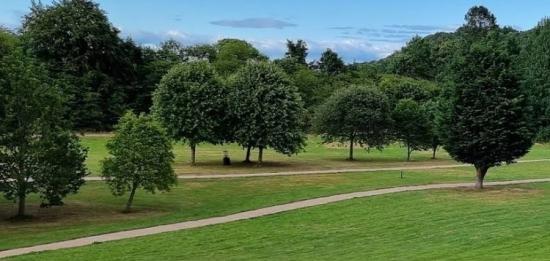
There may be no more appropriate time to ask Highland Council whether we need to rethink the way we remember those who have died.
The Council has just launched a six-week consultation on its draft Greenspace Biodiversity Management Strategy 2026-2030. It is asking people across the Highlands to think about how Council-owned land and greenspaces should be managed to support biodiversity while continuing to provide places for people to enjoy.
What caught my attention is the breadth of land included in the strategy.
It covers public parks and amenity greenspaces, countryside sites, roads and transport networks, schools, buildings, streets and civic spaces, allotments — and burial grounds.
That raises an interesting possibility.
Could some of our greenspaces also become places of remembrance?
Funerals and burials have become increasingly expensive, and although cremation can substantially reduce the cost of dealing with someone's remains, it does not necessarily solve another problem.
People often want somewhere to go.
A grave provides that place almost automatically. There is a particular spot, perhaps a headstone, and somewhere family members can visit years later.
Cremation is different.
Some families scatter ashes somewhere meaningful. Others keep them at home. Some bury them in a cemetery. But many people would probably welcome an attractive, permanent place where ashes could be scattered or buried without the cost of a traditional grave.
Perhaps that is where the idea of a Highland remembrance park deserves consideration.
Imagine a properly designed area of Council-owned land, perhaps incorporated into an existing greenspace or developed as a dedicated remembrance garden.
It would not need rows of traditional graves.
Instead, there could be natural areas where ashes could be scattered, small plots where ashes could be buried, paths through planting, benches and quiet places to sit. Families could perhaps choose to have a simple plaque or have a person's name recorded in a communal memorial.
The emphasis would be on the landscape rather than the individual monument.
And that could potentially make remembrance considerably less expensive.
It could also fit surprisingly well with the Council's new approach to greenspace.
A remembrance park does not have to be a manicured cemetery. It could be a living landscape — trees, native plants, wildflowers, paths and areas deliberately managed for biodiversity.
Someone could visit to remember a parent, partner, friend or relative while also enjoying the same natural environment that other members of the community use.
There is something rather attractive about that idea.
Instead of thinking of a cemetery purely as a place containing graves, perhaps we should think more broadly about creating places that combine nature, remembrance and community.
There would, of course, have to be rules.
Ashes could not simply be buried or scattered wherever someone chose. The Council would need to determine appropriate locations, environmental requirements, records, maintenance arrangements and what kinds of memorials would be permitted.
But those are practical questions rather than reasons not to consider the concept.
Indeed, the Council's consultation makes this particularly timely.
The draft strategy includes burial grounds within its overall approach to managing greenspace, while the Council says that more detailed opportunities for communities to influence individual sites will come later.
So perhaps one question worth putting into the consultation is this:
Could Highland Council investigate whether some Council-owned greenspaces could be developed as low-cost remembrance parks or gardens where people could scatter or bury ashes in a natural setting?
It would not mean replacing traditional cemeteries.
There will always be people who want a conventional burial and a permanent grave.
Nor would it mean that every park should become a memorial garden.
It would simply provide another choice.
And choice could become increasingly important as funeral costs rise.
There is also a wider social question here.
We have become very good at talking about the practical side of death — funeral costs, cremation fees, burial charges and the availability of burial plots.
But perhaps we don't talk enough about what happens afterwards.
A funeral lasts a few hours.
The need to remember someone can last for decades.
If a family cannot afford a traditional grave, that does not mean they have any less need for a place associated with the person they have lost.
A well-designed remembrance park could provide that place without requiring every family to maintain an individual grave and expensive memorial.
It could also become part of the community's landscape rather than somewhere people visit only for funerals.
A bench overlooking the sea. A path through native woodland. A garden of wildflowers. A tree planted in memory of someone. A quiet place where a family can sit together.
These can be powerful memorials without being expensive monuments.
There is perhaps an opportunity here for Highland to think differently.
The Council is already asking residents what they want from its greenspaces and how those spaces should be managed for the future.
Why shouldn't remembrance be part of that conversation?
Perhaps the cemetery of the future doesn't have to look like a cemetery at all.
It could look much more like a park.
And perhaps, at a time when families are under financial pressure, that could allow people to say goodbye in a meaningful way without turning remembrance into another major financial burden.
The question is now being asked about the future of Highland's greenspaces.
Maybe this is one more possibility that deserves to be considered.
The Highland Council Press release
Chance to have your say on the future of Highland's greenspaces
Public consultation launched on draft Greenspace Biodiversity Management Strategy 2026-2030
People across the Highlands are being invited to have their say on a new strategy that aims to help protect, restore and enhance nature across Council-owned land and greenspaces.
The Highland Council has launched a six-week public consultation on its draft Greenspace Biodiversity Management Strategy 2026-2030, which sets out a framework and practical guidance for managing Council-owned greenspaces to support biodiversity and respond to the ecological and climate emergencies.
The draft strategy outlines an ambitious set of principles, objectives and targets for managing greenspaces across eight categories of Council-owned assets: public parks and amenity greenspaces, burial grounds, roads and transport networks, countryside sites, schools, buildings, streets and civic spaces, and allotments.
The strategy has been developed in collaboration with key operational teams and has received input from Councillors and a wide range of Council services. The Council is now seeking the views of residents, visitors, community groups and organisations before the final strategy is brought back to a future meeting of the Communities and Place Committee for approval and adoption.
Chair of The Highland Council's Communities and Place Committee, Councillor Graham MacKenzie said: "Our parks, open spaces, roadside verges and other greenspaces have an important role to play in helping wildlife thrive while creating healthier and more resilient communities.
"The draft Greenspace Biodiversity Management Strategy sets out how we can work towards enhancing biodiversity across Council-owned land while continuing to provide welcoming and accessible spaces for people to enjoy.
"I would encourage everyone with an interest in the future of Highland's natural environment to take part in this consultation. Whether you are a resident, visitor, community group or organisation, your views will help shape the final strategy and ensure it reflects the priorities of the communities we serve."
The consultation focuses on the Council's strategic approach to biodiversity management and will not determine detailed changes to individual parks, verges or burial grounds. There will be further opportunities for communities to help shape site-specific management plans for local greenspaces in the future.
The consultation is now open and will run until midnight on Sunday 4 October. It can be accessed via the Council's engagement platform EngageHighland
Following the consultation, responses will be reviewed and used to help inform the final Greenspace Biodiversity Management Strategy 2026-2030 before it is presented to the Communities and Place Committee for discussion and formal approval.
About Engage Highland platform
The easy-to-use platform allows anyone to quickly see what projects and proposals are open for consultation and engagement. People can choose to register, or take part in consultations without registering.
For registered users, there are interactive mapping and voting capabilities as well as a mechanism for the vital ‘feedback’ loop, to find out what has been agreed and why. Users can also set up alerts, so they receive automatic notifications when any consultations are launched in a specific geographic area or on a topic, they are particularly interested in.
Related Businesses
Related Articles