Contractor Appointed For Kessock Bridge Works

21st December 2012
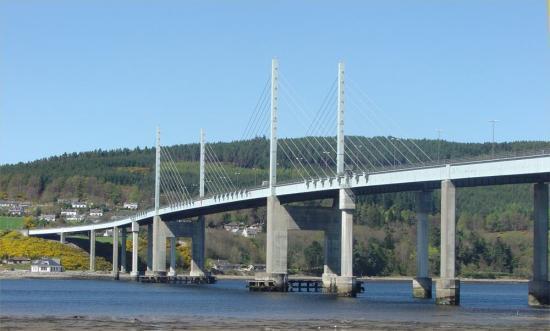
Photograph of Contractor Appointed For Kessock Bridge Works

Commuters urged to think ahead.

A programme of essential repairs to the Kessock Bridge took a step forward today when Transport Scotland announced that Balfour Beatty Civil Engineering had been appointed to undertake the works.

The £13.2 million contract will see the engineering firm carry out extensive refurbishment works, including resurfacing of the bridge deck, on the 30-year-old bridge between February and June 2013 and between February and June 2014.

With significant delays expected on and around the bridge during the works, commuters are being urged to give their travel arrangements some thought during the festive holidays.

A Transport Scotland spokesman said: “Within a matter of weeks from now this project begins, and we are encouraging people travelling to and from Inverness during peak times to start thinking now about alternative and easier ways to travel while these works are going on.

“There will be additional capacity on both buses and trains from February and public transport will allow people to get in and out of the city faster. A local car-share scheme has also been set up and if enough people take advantage of this, we can reduce the number of cars on the road and hence reduce congestion.

“We have already invested heavily in measures to alleviate congestion, including improvements to Longman roundabout and the reopening of Conon Bridge Station. However, we all have a part to play in keeping Inverness moving during these essential repairs and I urge commuters to think about what they could do differently to avoid being delayed in queues when the works start in February.”

The first phase of the resurfacing work will commence in February 2013 and last until June 2013, with a second phase the following year, commencing February 2014 and lasting until June 2014.

Traffic restrictions will be in place during these times, with lane closures and a reduced speed limit of 30mph on the bridge for the safety of motorists and the workforce.

Murray Easton, Balfour Beatty, Managing Director Scotland, said: “This is an important contract for the north of Scotland and we are delighted to have been awarded it. We have extensive experience of working on complex bridge projects in demanding situations, for example on the M74 completion project and the Forth Road Bridge. We will draw on all that experience to carry out the contract with as little disruption as possible.”

Peak-time train services into Inverness will be doubled in capacity during the works (four carriages instead of two) - see www.scotrail.co.uk for timetable details.

A dedicated bus lane will be put in place on the A9 south running from Tore Roundabout to Kessock Bridge and Stagecoach is currently developing a timetable of additional bus services to and from the Black Isle – seewww.stagecoachbus.com/highlands

A local car-sharing scheme has been set up by Transition Black Isle, allowing people in and around Inverness to be matched up with commuters making the same journey.

The Kessock Bridge opened to traffic in 1982. It is a cable stayed bridge and carries the A9 dual carriageway trunk road across the Beauly Firth at Inverness. The traffic flow on Kessock Bridge is approximately 30,000 vehicles per day with 11% of these HGVs.

The main works will involve removing the existing road surface, repairing any defects to the bridge steel deck plate, applying waterproofing to bridge steel deck plate and resurfacing both carriageways. Contractors will also replace the bridge deck expansion joints, replace the lighting columns, replace the safety fences in the central reserve and footways and resurface the footways and cycle-ways.

Motorists driving in and around Inverness during the works can access up to the minute journey time information at www.trafficscotland.org. Further journey planning information is also available on Twitter and via the Travelline Scotland/Transport Scotland travel app.


Related Businesses


Related Articles

Yesterday : Local Authority

 
Highland's Growth Ambitions: Billions in Investment Promised, But Can the Numbers Really Add Up?

Highland Council has set out an ambitious vision for the economic future of the Highlands, with the possibility of attracting between £10 billion and £16 billion of public and private investment over the next 25 years.   On paper, it is an impressive prospect.  

Yesterday : Local Authority

Caithness Committee approves six Community Regeneration Fund applications - £237,155

The Caithness Area Committee which met (Monday 2 November 2026) has approved six applications submitted to the Community Regeneration Fund (CRF).   This approval securing significant investment to support local projects that will benefit communities across the north.  

31/10/2026 : Local Authority

Caithness at the Sharp End: Broadband, Buses and Public Services Under Pressure

From the loss of a direct bus link to Inverness to uncertainty over rural broadband, a difficult council budget and the future of community organisations, the past week has provided plenty for Caithness residents to think about.  But there have also been celebrations, local achievements and signs of community spirit.  

31/10/2026 : Local Authority

 
Highland Council Faces a £39.2 Million Budget Gap: Will Council Taxpayers and Services Pay the Price?

Highland Council is facing another difficult financial challenge, with councillors being told that a further £39.2 million in savings must be found over the next three years to balance the authority's finances.   The announcement, made at the full council meeting on 29 October 2026, represents a substantial deterioration in the financial outlook.  

30/10/2026 : Local Authority

 
Highland Council Visitor Levy Consultation In-person Events Announced

Residents, businesses, community groups and visitors are encouraged to continue to take part in a series of public engagement events to learn more about the proposed Highland Visitor Levy and how they can contribute to the statutory public consultation.   In addition to the online webinars held earlier in the process, a programme of in-person events will continue throughout November.  

30/10/2026 : Local Authority

The Highland Council agrees budget engagement programme

Members of the public, community groups, the business sector and young people will be invited to share their views on how The Highland Council balances its budget and plans spend over the next three years.   The Council needs to find £39.2 million of additional savings over the next three years to deliver a balanced financial plan, driven largely by the impact of rising costs and the ongoing impact of wider economic events.  

29/10/2026 : Local Authority

The Hidden Cost of a 1% Capital Budget Cut: Could Scotland's Schools, Roads and Highland Investment Plans Be Affected?

The Chancellor's decision to reduce departmental capital budgets by 1% could have consequences well beyond Westminster.  Scotland faces a reduction in capital funding, while Highland Council is embarking on a £2.1 billion investment programme that includes a proposed £100 million education campus in Thurso.  

28/10/2026 : Local Authority

When Fuel Prices Rise, Who Pays the Bill for Public Services?

Councils, the NHS and other public bodies face a difficult choice when rising diesel and energy costs threaten the contractors they depend on.  School transport in rural Scotland illustrates the problem.  

27/10/2026 : Local Authority

Gaelic Spending Under Scrutiny: Can Highland Council Afford Another Post While Jobs Are Under Pressure?

The council has legal responsibilities to support Gaelic, but with budgets stretched and services facing difficult choices.  Residents are entitled to ask how priorities are decided across the Highlands.  

24/10/2026 : Local Authority

 
Libraries, Leisure Centres and Local Culture Face Growing Pressure as Council Charges Rise

Audit Scotland warns that cuts to community services could deepen inequalities, while councils lack the evidence to measure the full consequences.   Scotland’s councils are spending less on culture and leisure services while asking the public to pay more to use them, raising questions about the future of libraries, swimming pools, sports facilities, museums and other important parts of community life.