Peak time restrictions lifted on Kessock Bridge

27th June 2013
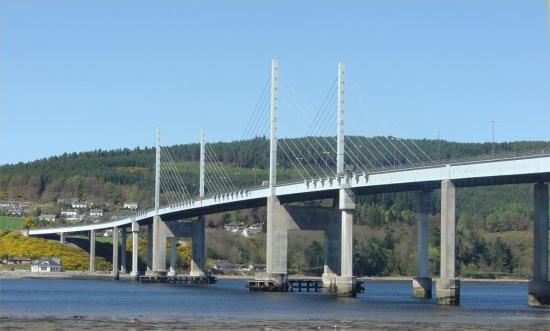
Photograph of Peak time restrictions lifted on Kessock Bridge

Peak time restrictions are being lifted on the Kessock Bridge on Saturday 29th June, reopening all lanes to traffic during the day, as the first phase of the £13.2 million upgrade draws to a close.

Balfour Beatty will continue work on the bridge during off peak hours and at night. This work will last up to 2 weeks starting Sunday, June 30 and the northbound footpath will be closed as a result. The pedestrian and cycle diversion already in place will remain. A 30 mph speed restriction to protect the workforce will also remain on the bridge until these works are complete.

The final layer of the new state of the art Gussasphalt road surface was laid on Friday 14th June in one continuous 1 km operation by specialist contractors. The equipment being used was brought in from Switzerland and this is the first time it has been used in Scotland.

The innovative approach, which has been a feature of the project, will result on both short and long-term gains for the local community with the highly durable materials expected to keep the Bridge free of major repairs for thirty years.

Motorists and businesses users can look forward to faster access in and out of Inverness thanks to improvements at the Longman Roundabout. Road users should note that the traffic signals will be adjusted over the next two weeks to make sure they are delivering the maximum benefit possible. Some traffic signs and road markings will also be changed.

It is estimated that a thousand less cars crossed the bridge during peak times each day, contributing to a reduction in delays during the works.

A Transport Scotland spokesman said: “The upgraded Kessock Bridge will give the people of Inverness a state of the art crossing when it is complete and we would like to thank road users, local businesses and the community for their patience during the first stage of the refurbishment.

“Everyone has made a real effort and pulled together to make sure that traffic delays were kept to a minimum to allow these essential works to take place.

“This significant investment in the latest resurfacing technology by Transport Scotland will bring immediate improvements, such as reduced journey times, but will also allow goods and services to travel through Inverness for years to come.

“Walkers and cyclists will also benefit from the use of the newly refurbished northbound footpath. This is being resurfaced and safety barriers being improved.”

The Highland Council Leader Drew Hendry has also thanked the travelling public and the Council’s 10,000 strong workforce for helping minimise disruption on the Kessock Bridge during the resurfacing works over the past four months.

Councillor Hendry said: “Thanks to everyone’s efforts in changing their work and travel patterns the level of disruption has been significantly reduced. The reduction in 1,000 cars crossing the bridge at peak times has made a real difference.

“ I am sure that many people will have learned very valuable lessons ahead of next year’s second and final phase of resurfacing and indeed many may make their alternative arrangements permanent.

“I am looking forward to reduced travel times once we resume full use of the bridge and the benefits of the measures taken around the bridge to improve traffic movement. The short term pain will be more than compensated for by the long-term gain. The investment by the Scottish Government in this vital link is greatly appreciated.”


Related Businesses


Related Articles

Today : Local Authority

Highland Council monitoring temporary disruption to DWP online services

Council services continue to operate while precautionary measures are in place following a DWP cyber incident.   The Highland Council is aware of temporary disruption affecting some Department for Work and Pensions (DWP) online services following a cyber incident identified within DWP systems.  

Today : Local Authority

Visitor Levy Consultation extended following publication of Economic Impact Assessment

The Highland Council has extended its public consultation on a proposed tiered fixed-rate Visitor Levy Scheme until Thursday 10 December 2026, following publication of the additional Economic Impact Assessment (EIA).  The Visitor Levy Scheme will be considered by Members in January 2027.  

Today : Local Authority

Britain's Public Services Are in a Financial Doom Loop – Why Are Cuts the Only Answer?

I wanted to give an overview of the issues but in case you don't have lot of time here is short paragraph of what its about - Bill Fernie.   Britain's public services are facing mounting financial pressures, with councils struggling to balance their budgets, the NHS battling rising costs and demand, and universities increasingly worried about deficits and falling student recruitment.  

Today : Local Authority

Would Dounreay Be Built Today? How the Internet Has Changed Planning, Politics and Public Opposition

The development of Dounreay in the 1950s transformed Caithness.  What had been a relatively remote part of Scotland became an important centre of nuclear research, bringing skilled employment, new families, housing and investment into the area.  

Today : Local Authority

Highland's £2.1 Billion Investment Promise – Will Caithness Get the New Schools and Buildings It Has Been Promised?

With the Scottish Government facing difficult budget decisions, questions are likely to be asked about Highland Council's ambitious capital investment programme.  For Caithness, the most important issue is whether proposed new schools and public buildings will actually be delivered, or whether financial pressures will force delays and changes.  

26/11/2026 : Local Authority

Scotland's Health and Social Care Budgets Under Pressure – Why Highland Faces the Biggest Financial Challenge

Scotland's health and social care services are facing an increasingly difficult financial situation, with new figures revealing a funding pressure approaching £475 million across the country's integration authorities for 2026/27.   The figures raise serious questions about whether the current system can continue delivering the services people need, particularly as Scotland's population ages, more people require complex care and the costs of providing support continue to rise.  

26/11/2026 : Local Authority

Highland Council seeks tenants’ views on rent for 2027/28

The Highland Council is inviting tenants to share their views on proposed rent levels for 2027/28.   Rent income is vital for funding essential repairs, maintenance, and improvements to council homes.  

23/11/2026 : Local Authority

Britain's Coming Financial Squeeze: Four Questions We Need to Ask Before Spring 2027

There is no shortage of economic forecasts, warnings about inflation, predictions about energy prices and reports about the financial difficulties facing councils and public services.   But what does all this actually mean for ordinary households, and what happens when families can no longer keep up with their bills?.  

22/11/2026 : Local Authority

Scotland's Public Services Face a Financial Squeeze: Are Council and NHS Cuts Now Inevitable?

Scotland's councils and NHS health boards are approaching another difficult round of budget decisions.  Many are already struggling to balance their books, having spent several years absorbing rising costs, increasing demand and funding that has not always kept pace with inflation.  

19/11/2026 : Local Authority

UK Shared Prosperity Fund investment helps grow green skills in the Highlands

Investment through the UK Shared Prosperity Fund is helping UHI Inverness expand access to green skills training and new technologies, supporting the workforce needed for the Highlands' transition to a low carbon economy.   A total of £220,000 of UK Shared Prosperity Fund support has been awarded towards a £234,000 programme, covering three linked projects: green skills training, Solar PV installation, and the purchase of augmented and virtual reality welding equipment.