Highland Council Faces a £39.2 Million Budget Gap: Will Council Taxpayers and Services Pay the Price?
31st October 2026
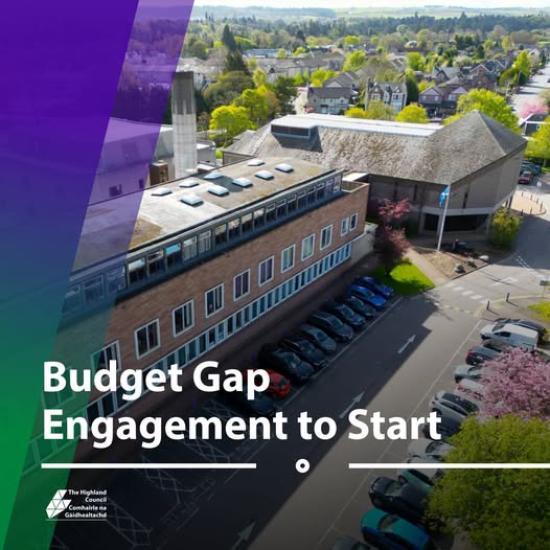
Highland Council is facing another difficult financial challenge, with councillors being told that a further £39.2 million in savings must be found over the next three years to balance the authority's finances.
The announcement, made at the full council meeting on 29 October 2026, represents a substantial deterioration in the financial outlook. Back in March, the projected gap was just £5 million.
The latest figure comes on top of £32.8 million in savings and other budget measures already agreed for 2027/28 and 2028/29.
For residents across the Highlands, the question is what this means for the services they receive, the council tax they pay and the future of local government in an area covering such a large geographical territory.
The council is now preparing a public consultation, inviting residents, businesses, community organisations and young people to help decide where savings might be made and how additional income could be generated.
But there is no escaping the fact that difficult decisions lie ahead.
Why has the financial position deteriorated?
The council says the worsening position reflects rising costs and continuing economic uncertainty.
Inflation, higher interest rates and international events, including the conflict in the Middle East, have all contributed to increased financial pressures.
The council has also warned that early indications suggest its next funding settlement from the Scottish Government could be lower than previously anticipated and may not even maintain existing spending levels in cash terms.
That is important because councils face rising costs for wages, pensions, building maintenance, transport, social care and other services.
Highland has additional geographical challenges. It must maintain more than 4,000 miles of roads and provide services across a vast rural area, often with relatively small populations in individual communities.
A school, care service or local facility in a remote community may cost considerably more per person to operate than an equivalent service in a densely populated urban area.
The council has previously argued that funding formulas based heavily on population do not fully recognise these geographical differences.
The council has already been making savings
This is not a new problem.
Highland Council previously faced a much larger projected financial gap, reported to be around £113 million in 2024.
Over subsequent years, it has undertaken savings programmes, changed working arrangements and attempted to generate additional income.
The council says it has already identified £32.8 million in savings and other measures over the next three years.
However, the latest financial forecast shows that these measures are not sufficient.
The authority is continuing with its three-pillar approach:
Financial flexibilities, including council tax and other income and financing options.
Strategic savings across the council, including staffing, fees and charges.
Savings within individual services and council departments.
The council has previously estimated that financial flexibilities could contribute around £12.8 million over the three-year period, with strategic and service savings expected to provide around £20 million.
The precise measures will need further consideration before the budget is agreed.
Will council tax have to rise?
One of the obvious questions is whether residents should prepare for further council tax increases.
Council tax has already increased significantly in many parts of Scotland over recent years, and Highland households will be concerned about another round of increases.
The council has identified taxation as one of the financial options available to it.
Opposition councillors have warned that increases could amount to 22.5 per cent over three years, although this is a political warning rather than an agreed council tax proposal.
Any actual increase will require a decision by councillors as part of the annual budget process.
There is also a wider question about whether repeatedly increasing council tax is a sustainable way of funding local services.
Households are already dealing with higher food, energy, insurance and housing costs. Pensioners on fixed incomes and families with limited financial flexibility may find further increases particularly difficult.
On the other hand, councillors must consider what would happen to services if additional income cannot be raised.
There are no easy answers.
Could services be reduced further?
The council has not yet identified a detailed list of services that will be reduced.
However, the scale of the savings requirement means that residents will inevitably want to know which areas could be affected.
Education, social care, roads, waste collection, libraries, leisure facilities and public transport all place demands on the council's budget.
Some services are statutory, meaning the council has legal responsibilities to provide them. Others offer important support to communities but may have greater scope for changes in the way they are delivered.
There is also a danger that apparent savings in one area simply create additional costs elsewhere.
Reducing preventative social care, for example, could increase pressure on hospitals and emergency services.
Cutting road maintenance might reduce immediate expenditure but lead to more expensive repairs later.
The challenge is to distinguish between genuine efficiency savings and reductions which simply transfer costs to another public service or to local residents.
Staffing and redundancies
Staffing is another sensitive issue.
Highland Council has a substantial workforce, and employee costs represent a major part of its annual expenditure.
The council's savings strategy includes consideration of staffing arrangements and how services are organised.
Council leaders have indicated that they do not intend to introduce compulsory or voluntary redundancies as part of the current approach.
However, residents and employees will understandably want clarity about what this means in practice.
Could vacancies be left unfilled? Could staff be moved between departments? Could services increasingly be delivered through technology or shared arrangements with other organisations?
These are all possibilities that need to be explained.
Reducing staffing numbers is not necessarily a saving if it results in longer waiting times, reduced service availability or additional pressure on remaining employees.
What does this mean for Caithness and Sutherland?
The financial challenge has particular implications for the more remote parts of Highland.
Caithness and Sutherland already face concerns about the availability of public services and the tendency for decision-making and resources to become concentrated around Inverness.
Maintaining local services can be more expensive in rural areas because of distances, smaller populations and limited transport alternatives.
A reduction in local facilities may therefore have a greater effect on residents who cannot easily travel elsewhere.
The council needs to demonstrate that savings are being considered fairly across the whole Highland area.
There is also an opportunity to examine whether new developments and investment can help improve the financial position.
The council has been pursuing its Highland Investment Plan, encouraging renewable energy developers to provide community benefits and seeking to increase economic activity and housing.
More houses can generate additional council tax income, while successful local businesses can expand the tax base indirectly through employment and economic growth.
However, these developments take time and cannot solve an immediate budget problem.
The public consultation: will residents take part?
The council has agreed to a programme of public engagement beginning in November.
It intends to provide a budget simulator, allowing residents to explore different spending and savings options.
There will also be surveys for the general public, community organisations and young people, together with an online ideas board.
Focus groups are planned with community councils, businesses, tenant organisations, third-sector groups and parent councils.
A further phase of consultation is expected in January and February 2027.
The final budget decision is scheduled for 4 March 2027.
This is an opportunity for residents to influence decisions that will affect their communities for several years.
But there is a familiar problem with public consultations.
Councils frequently complain that residents do not engage sufficiently, yet many consultations attract relatively few responses.
People may feel that decisions have already been made, that their opinions will not make much difference or that the process is too complicated.
This time, the council should make a particular effort to explain the choices in straightforward language.
Residents need to see what different levels of spending mean in practice.
If maintaining a particular service requires additional council tax, that should be made clear. Equally, if reducing expenditure means closing facilities or reducing opening hours, residents should be told exactly what the consequences might be.
A consultation should not simply ask people whether they want lower taxes and better services. Most would obviously choose both.
It should explain the difficult trade-offs.
Local government needs a longer-term answer
There is a wider issue behind Highland Council's financial difficulties.
Councils across Scotland are under pressure from rising costs, increasing demand for social care and other services, and uncertainty over future funding.
The current system often leaves local authorities trying to balance annual budgets while dealing with problems that have been developing for many years.
There is a case for examining whether the way councils are funded properly reflects the cost of delivering services in rural and remote areas.
There is also a need to consider whether local government structures and service delivery arrangements are providing the best value for taxpayers.
These are not questions that can be answered simply by cutting budgets or increasing council tax.
Highland Council now has several months to develop its proposals before councillors make their decision in March.
The £39.2 million gap is a warning that the financial pressures have not gone away, despite years of savings and restructuring.
For residents, the coming consultation is an opportunity to make their views heard.
If people want to influence what happens to their local services, this is the time to participate rather than waiting until decisions have been made.
The challenge for councillors will be to demonstrate that they have listened, explained the choices and distributed the financial burden fairly across the Highlands.
Related Businesses
Related Articles