Highland's Growth Ambitions: Billions in Investment Promised, But Can the Numbers Really Add Up?
3rd November 2026
Highland Council has set out an ambitious vision for the economic future of the Highlands, with the possibility of attracting between £10 billion and £16 billion of public and private investment over the next 25 years.
On paper, it is an impressive prospect. Renewable energy, electricity transmission, ports, housing, transport, digital connectivity, skills and business development could all contribute to a stronger regional economy.
There is little doubt that Highland has significant opportunities. The challenge, however, is whether the ambitions being discussed can realistically be delivered, particularly when public finances are under pressure, construction costs remain high and even existing housebuilding targets are proving difficult to achieve.
A report presented to Highland Council on 29 October 2026, entitled Towards a Future Growth for Highland, seeks approval to begin formal discussions with the Scottish and UK Governments about developing a new Highland Growth Deal.
Importantly, this is not yet an agreed funding package or a programme of approved projects. Councillors have agreed to develop a strategic proposition and engage with both governments. Further work will be required before a detailed investment framework comes back to members.
That distinction matters. An investment opportunity is not the same as a financial commitment, and a financial commitment is not necessarily a guarantee that a project will be completed.
Billions on the table, but where will the money come from?
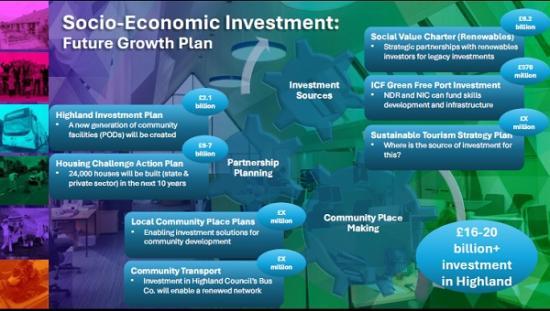
One of the first figures attracting attention is the potential £10–16 billion investment over 25 years. However, the report's Appendix 2 also contains a headline figure of £16–20 billion-plus.
This apparent difference deserves explanation.
The figures bring together several existing and potential investment streams, rather than representing a new pot of money being made available through a Growth Deal.
For example, the report refers to a Highland Investment Plan involving £2 billion over 20 years, with £750 million committed over the next five years. It also highlights £6 billion in investor pledges through the Highland Social Value Charter, with an ambition to leverage £10 billion overall.
These are potentially important developments, but pledges, planned expenditure and confirmed funding are not interchangeable.
There is also a question about how much of this investment would take place anyway, even without a new Growth Deal.
The Council itself acknowledges that projects will need to be separated into those already funded, those requiring additional support and genuinely new interventions that cannot proceed without government participation.
That is precisely the information residents and businesses need to see.
The housing challenge illustrates the problem
Perhaps the most obvious test of the Growth Plan's credibility is housing.
The Highland Housing Challenge aims to deliver 25,000 additional homes by 2035. Yet Appendix 2 of the Growth Plan refers to 24,000 homes over ten years.
Either figure represents a substantial increase in building activity.
To deliver 24,000 homes would require an average of 2,400 completions annually. The target of 25,000 would require 2,500.
However, Highland Council's own housing report recorded just 880 completed homes across all tenures in 2025/26, compared with 1,000 the previous year.
That means annual completions would have to increase to almost three times their current level.
The difficulties are well understood. Land availability, construction costs, infrastructure, planning, contractor capacity and access to finance all affect the ability to build at scale.
---The Highland Council
The national picture is not encouraging either. Scottish Government statistics show that 17,057 new homes were completed in the year to June 2026, an 11% reduction on the previous year. Completions were at their lowest level since 2015.
Scottish Government
Highland may have opportunities that other areas do not, particularly from energy developments and associated employment, but those opportunities will not automatically translate into thousands of additional houses.
Public finances and inflation cannot be ignored
The timing of the proposed Growth Deal is also important.
Both the Scottish and UK Governments face difficult spending decisions. Public services are under pressure, local authorities are trying to balance their budgets and infrastructure projects must compete for limited capital funding.
Highland Council is not immune. Its own report acknowledges increasing pressure on public finances and the need for greater coordination between governments, agencies and private investors.
Construction inflation is another concern. Even where projects have been identified and funding provisionally allocated, rising costs can change the economics considerably.
A project estimated to cost £100 million today may cost substantially more by the time planning, funding negotiations and procurement have been completed.
Interest rates and borrowing costs also matter, particularly for projects requiring long-term financing.
The Council says that initial development work will be undertaken using existing resources. However, it also acknowledges that dedicated programme capacity and specialist support may be required as the proposals develop. The additional financial and staffing implications will be reported later.
That is understandable, but it raises another question: how much will it cost to develop and manage the programme before any additional investment actually arrives?
Highland Council
Will the benefits reach every part of Highland?
There is also a geographical issue.
The Highlands cover an enormous area, with very different economic circumstances between Inverness, the Cromarty Firth, Lochaber, Skye, Caithness and Sutherland.
The Green Freeport and major energy infrastructure developments offer significant opportunities around the Inner Moray Firth. However, communities further north will also want to see tangible benefits.
Caithness, for example, has opportunities associated with Dounreay, nuclear technology, renewable energy, electricity transmission and supporting industries.
But major construction projects do not necessarily create permanent local employment on the scale that their headline investment figures might suggest.
There is a need to ensure that local businesses secure contracts, young people receive training, workers can find somewhere to live and communities retain a meaningful share of the economic benefits.
The Growth Plan recognises this challenge and proposes a stronger emphasis on community wealth building, local procurement and retaining more economic value within Highland.
That is welcome, but the eventual results will matter considerably more than the wording of the strategy.
Ambition is necessary, but accountability is essential
There is a strong argument for Highland Council taking a more ambitious approach to economic development.
Without a coordinated strategy, the region could miss opportunities worth billions of pounds. Energy companies, infrastructure providers and private investors need to know that Highland has a clear direction and is prepared to work with them.
However, ambition should not be confused with certainty.
The report is an initial framework, not a detailed delivery plan. It identifies opportunities and seeks to position Highland to attract investment, but much remains to be negotiated and agreed.
Before the next stage is approved, councillors should be asking for a clear breakdown of the proposed investment, distinguishing between money already committed, investor pledges, potential government contributions and projects that remain aspirations.
They should also insist on realistic delivery milestones, annual progress reports and a clear explanation of how benefits will be distributed across the region.
Most importantly, there should be contingency plans if government funding is reduced, private investment fails to materialise or construction costs rise further.
A vision worth pursuing, but not without some hard questions
Highland needs economic growth, more homes, better infrastructure and employment opportunities. Few people would disagree with those objectives.
But the proposed Growth Deal must eventually demonstrate that it can turn impressive headline figures into practical results.
The housing target alone illustrates the difficulty. Moving from 880 annual completions to an average of 2,400–2,500 requires a transformation in building capacity, finance and infrastructure.
The same test applies to the wider investment programme.
The question is not whether Highland should be ambitious. It should. The question is whether the ambitions are supported by realistic financial commitments, credible delivery plans and measurable benefits for the communities expected to share in the prosperity.
Otherwise, there is a danger that another impressive economic strategy will generate plenty of headlines but leave residents waiting considerably longer for the homes, jobs and infrastructure they were promised.
[url=https://shorturl.at/2qzy1]Highland Council – Towards a Future Growth for Highland 29 October 2026[/url]
Related Businesses
Related Articles