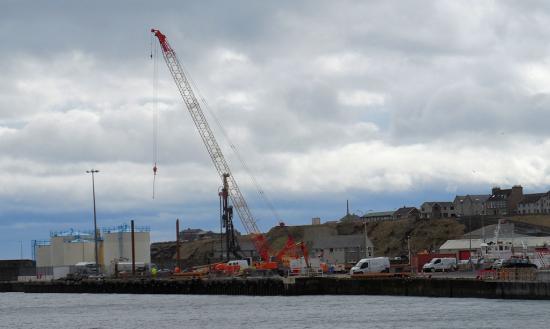
Heavy Lift Pad Construction Underway At Wick Harbour
14th March 2014
Wick Harbour Authority is making progress with its plans to create a heavy-lift facility on the commercial quay at Wick harbour, with contractors Gunns Lybster Ltd having now begun the work.
Related Businesses
Related Articles
Today : Advisory / Counseling Services
Innovation has always been a defining characteristic of businesses and social enterprises in the Highlands and Islands. Whether developing new products, finding ways to overcome the challenges of distance and geography, improving services, or identifying new markets, organisations across the region have a long track record of adapting and evolving.
30/9/2026 : Local Authority
Inverness will welcome government representatives, investors, business leaders and economic development partners later this week as it hosts the Scottish Cities Alliance Autumn Investor Event. A two-day programme designed to showcase investment opportunities across Inverness, the Highlands and Scotland's city regions.
29/9/2026 : Local Authority
Walk through almost any British town centre and you can see the evidence of change. There are empty shops where there were once businesses.
26/9/2026 : Advisory / Counseling Services
September has become a month when Scotland's aspiring entrepreneurs are being encouraged to take a closer look at an idea that may have been sitting in the back of their minds for some time. Scottish Start-Up Month, led by Business Gateway, has returned for 2026 with a simple message: if you have an idea for a business, this could be the month to take the first step.
22/9/2026 : Advisory / Counseling Services
Scotland and Ireland Strengthen Economic Links Between Gaelic Communities Scotland and Ireland are developing closer links between their Gaelic-speaking communities, with housing, artificial intelligence, renewable energy, tourism and the marine economy among the areas being explored for future cooperation. The initiative was highlighted during a visit to Skye by Ireland's President Catherine Connolly, who met representatives of Highland organisations including Highlands and Islands Enterprise (HIE) and Highland Council.
22/9/2026 : Advisory / Counseling Services
Businesses and social enterprises across the Highlands and Islands are being supported to explore the opportunities offered by artificial intelligence (AI) through two new support initiatives launched today by Highlands and Islands Enterprise (HIE) as part of AI Scotland. Applications are now open for the new AI Adoption Programme and AI Mentoring Support service, which are designed to help organisations understand, assess and implement AI technologies that can improve productivity, boost innovation and support growth.
21/9/2026 : Advisory / Counseling Services
A new three-year programme (14 September) is expected to help more than 500 businesses and social enterprises across the Highlands and Islands to innovate and grow. Highlands and Islands Enterprise (HIE) has approved a £1.78m budget to fund the programme, which builds on ten years of innovation support by the agency.
11/9/2026 : Advisory / Counseling Services
Highlands and Islands Enterprise (HIE) has appointed Claire Wilson as its new area manager for Caithness and Sutherland. Claire succeeds Eann Sinclair, who retired after eight years as area manager and more than three decades with HIE.
8/9/2026 : Advisory / Counseling Services
Plans to produce floating offshore wind foundations at Port of Ardersier have taken a step forward with the approval of more than £778,000 in Scottish Government funding. Approval was given by Highlands and Islands Enterprise (HIE) after close collaboration with Scottish Enterprise’s international arm, Scottish Development International (SDI), to secure the project for Scotland.
1/9/2026 : Advisory / Counseling Services
There is an encouraging message in the latest investment figures for Scotland. There is also a question that should matter particularly to Caithness and Sutherland.