Highland Council - Tain & Easter Ross By-election Result - Independent Win

29th September 2023

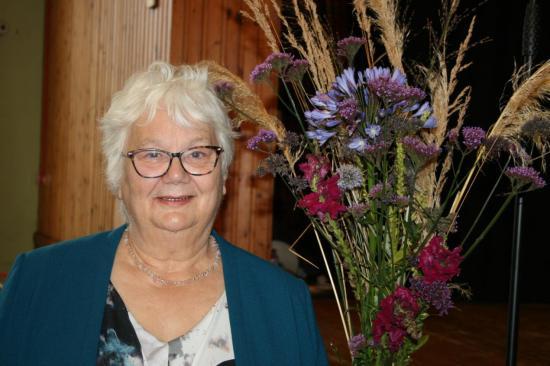
Photograph of Highland Council - Tain & Easter Ross By-election Result - Independent Win

The by-election to elect a councillor to represent Ward 7 - Tain and Easter Ross on The Highland Council has been won by Maureen Ross (Independent) who was one of seven candidates who contested the vacancy.

One of three seats in the Tain and Easter Ross ward became vacant on the resignation of Sarah Rawlings (Scottish Libertal Democrat).

Voters went to the poll yesterday (Thursday 28 September) and the by-election count was held this morning in Tain Royal Academy. The count was relayed live on the Council's social media channels.

Voting was by the single transferable vote and Maureen Ross emerged as the winner at stage 6 of the count.

The turnout was 34.4%.

Details are on the Council's website - www.highland.gov.uk/byelection

Maureen will join councillors Derek Louden (Scottish National Party) and Alasdair Rhind (Highland Independent) in representing Ward 7 on The Highland Council.

The full vote stages can be seen HERE

With the election of Maureen Ross, the current political make-up of The Highland Council is as follows:

Caithness Independent (1)

Highland Independent (18)

Independent (1)

Inverness Independent (1)

Non-aligned (1)

Scottish Conservative and Unionist (9)

Scottish Green Party (4)

Scottish Labour Party (2)

Scottish Liberal Democrats (14)

Scottish National Party (22)

Sutherland Independent (1)

The Candidates for Ward 7- Tain and Easter Ross were:
ALLISON, Gordon - Scottish National Party (SNP)
BARNETT, Andrew - Scottish Green Party
CHRISTIAN, Harry - Scottish Libertarian Party
MORRISON, Veronica - Scottish Conservative and Unionist
PERERA, Michael - Scottish Labour Party
ROSS, Maureen - Independent
STEPHEN, Charles - Scottish Liberal Democrats
 

Related Businesses


Related Articles

Today : Local Authority

Climate Change Committee welcomes progress across Highland Council's Net Zero Programme

Members of Highland Council's Climate Change Committee have welcomed continued progress across a wide range of projects within the Council’s Net Zero Programme.   At the meeting held on Wednesday 28 January, Members received updates on delivery across the Sustainable Travel and Built Estate & Energy workstreams, highlighting tangible progress in reducing emissions, improving operational efficiency, and delivering long term financial savings.  

3/2/2026 : Local Authority

Homelessness statistics in Scotland - April to September 2025

An update on Homelessness Statistics covering 1 April to 30 September 2025 has been released today.   Over that period: There were 20,643 applications for homelessness assistance.  

29/1/2026 : Local Authority

Council Services Outsourced But Not Immune - Why High Life Highland Is Still Vulnerable to Budget Cuts

When Highland Council transferred responsibility for leisure, culture and community learning services to High Life Highland (HLH), the move was often presented as a way to protect valued local services from the worst of council budget cuts.   By placing libraries, leisure centres, swimming pools and cultural provision into a charitable trust, the council could take advantage of tax reliefs, external funding opportunities and more flexible operating arrangements.  

29/1/2026 : Local Authority

How Highland Council's Budget Decisions Expose Some Services More Than Others

Highland Council faces a set of financial pressures that are both familiar across Scottish local government and uniquely intensified by its geography, population size, and historic investment choices.   While headline debates often focus on council tax rises or total debt levels, the real impact of financial tightening is felt in how different services are protected, redesigned, or reduced over time.  

29/1/2026 : Local Authority

Which Services Are Most Likely to Face Cuts or Reductions At Budget Day

When budgets tighten in Highland Council, cuts tend not to fall evenly.  Some services are much more exposed than others because of how local government funding rules work and because of Highland's geography.  

29/1/2026 : Local Authority

How Highland Council Debt Affects Local Services

Highland Council's high debt connects to local services and council tax, in practical, day-to-day terms.   Council debt doesn't pay for services directly — but it affects them.  

29/1/2026 : Local Authority

 
Highland Council Debt Is One Of Highest Per Person in the UK

Highland Council has one of the higher levels of debt among Scottish local authorities, especially when looked at per person.  It is not necessarily the absolute highest in total debt compared with councils that have much larger populations like Edinburgh or Glasgow.  

29/1/2026 : Local Authority

 
Scotland's councils risk becoming financially unsustainable

Whilst councils have made significant savings, the cost of delivering services is rising faster than available funding.  This risks the financial sustainability of councils over the next three to five years.  

29/1/2026 : Local Authority

Asset Management is a catalyst for change for The Highland Council

At the Housing & Property Committee (Wednesday 28 January 2026), Members approved the introduction of a new framework to guide decisions on the future of its assets, supporting a more efficient, sustainable and future-ready approach to service delivery.  The Strategic Asset Management Plan (SAMP) will help streamline the estate, embed new ways of working, and contribute to significant savings set out in the Council's Delivery Plan.  

29/1/2026 : Local Authority

Reduction in households in temporary accommodation and improved housing outcomes

At Housing & Property Committee (Wednesday 28 January 2026), The Highland Council reported a strong performance across several key housing indicators, including a reduction in households in temporary accommodation, improved repairs times, and the lowest level of rent arrears in three years.   New figures show that the number of homeless households living in temporary accommodation has fallen to 421, the lowest level recorded since The Scottish Government introduced this measure in April 2016.