Why Repaint a Building Marked for Demolition? The Practical Logic Behind the Dounreay Dome's Fresh Coat
14th March 2026
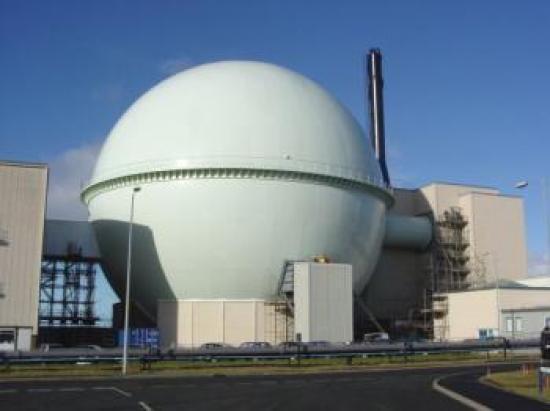
At first glance, the decision to repaint the iconic Dounreay dome as it is a structure already scheduled for demolition seems baffling. Why spend money maintaining a building that will soon be torn down? Why refresh the exterior of a landmark whose days are numbered?
The answer is far more practical than it appears.
The repainting of the Dounreay dome is not about aesthetics, nostalgia, or preserving a piece of nuclear history. It is about safety, stability, and the complex realities of nuclear decommissioning. And once those factors are understood, the decision makes perfect sense.
A Structure That Must Survive Long Enough to Be Taken Apart
The dome may be destined for demolition, but it cannot simply be left to deteriorate. Inside it sits the remains of the Dounreay Fast Reactor — a facility that requires years of careful dismantling under strict regulatory oversight. Until that process is complete, the dome must remain structurally sound.
Rust, corrosion, and weather damage are not cosmetic issues. They are threats to the integrity of a building that workers must enter, work around, and eventually dismantle in a controlled manner. A weakened structure is not just an inconvenience; it is a safety hazard.
Repainting is, therefore, a form of risk management. It slows corrosion, protects the steel shell, and ensures the dome remains stable until the final phase of decommissioning can begin.
You Can't Safely Demolish a Building That's Falling Apart
It may seem counterintuitive, but a building must be in good enough condition to be demolished safely. A structure weakened by rust or weathering can collapse unpredictably, endangering workers and complicating the dismantling process.
A controlled demolition requires:
predictable structural behaviour
safe access for workers
a stable shell during internal dismantling
compliance with nuclear safety regulations
Letting the dome decay would make the eventual demolition more dangerous, more expensive, and more time‑consuming.
A Patch‑Up, Not a Restoration
It’s important to understand that this is not a full cosmetic restoration. The dome is not being returned to its original gleaming white. The work is targeted, functional, and limited to areas where corrosion poses a risk.
This is maintenance, not beautification.
The goal is not to preserve the dome for posterity — it is to keep it intact just long enough to dismantle it safely.
A Reminder of the Long Road of Nuclear Decommissioning
The repainting also highlights a broader truth: nuclear decommissioning is slow, meticulous, and expensive. Structures cannot simply be abandoned to the elements. They must be maintained until every last piece of radioactive material is removed, stabilised, and stored.
The Dounreay dome will eventually disappear from the skyline, but until that day comes, it must remain safe. A fresh coat of paint is a small price to pay for preventing corrosion that could jeopardise the entire decommissioning process.
A Practical Decision, Not a Symbolic One
In the end, repainting the Dounreay dome is not about preserving a landmark. It is about ensuring that the final chapter of its life can be carried out safely, efficiently, and in compliance with nuclear regulations.
It may look like a contradiction — maintaining a building destined for demolition — but it is, in fact, a necessary step in the long, careful process of closing one of Scotland’s most complex industrial sites.
Related Businesses
Related Articles