Glen Earrach Energy signs Social Value Charter, pledging Scotland's largest Community Wealth Fund
13th May 2026
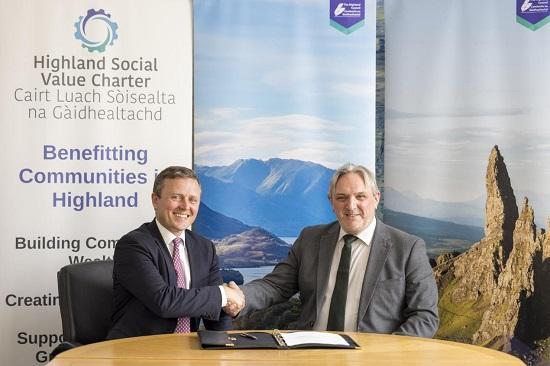
A pumped storage hydro project proposed near Loch Ness has committed to allocating 5 per cent of its annual gross margin to a Community Wealth Fund estimated to deliver over £20 million a year.
Glen Earrach Energy (GEE) has become the second company to sign the Highland Social Value Charter, marking a significant milestone in delivering long-term socio-economic benefits for communities across the Highlands.
The Social Value Charter is a nine-point framework designed to ensure consented renewable energy and green infrastructure developments generate lasting value for communities.
Entirely separate from the planning process, the Charter does not pre-determine planning decisions but sets commitments that where a development is approved, it delivers tangible community benefit and a legacy for communities.
GEE is developing a 2GW, 34GWh pumped storage hydro project on the Balmacaan Forest beside Loch Ness. The project is anticipated to support the equivalent of 285 jobs during pre-construction works, rising to 1,765 during the main construction phase, with 41 permanent roles once operational.
GEE has engaged with Highland communities since the project was first announced, recognising that local communities must be partners in, and beneficiaries of, the project’s success.
That engagement - including structured consultation, roundtables and independent polling of 2,000 adults nationally and a 500-person sample from the Highlands - led to the publication of GEE's Community Wealth Building report, which highlights a strong appetite among communities to shape their future and secure lasting investment in housing, jobs, skills and local capacity.
If the project goes ahead, the Charter commitment would see the creation of Scotland’s largest ever community benefit fund valued at around £3 billion over its initial 125-year operating term.
The fund would focus on local investment in the Loch Ness water catchment area, with a 20 per cent allocation to support strategic Highland-wide projects.
In addition to the Community Wealth Fund and local employment, in line with the principles set out in the Social Value Charter, further local community benefits would include:
Delivery of affordable housing for operational staff and the wider community, aligned with local housing plans.
Investment in strategic infrastructure, including road improvements to the A831.
Nature restoration and enhanced outdoor access infrastructure.
Workforce skills development to support a local recruitment pipeline.
Roderick MacLeod, Director of Glen Earrach Energy, said: “The GEE Community Wealth Fund is about more than sharing the benefits of clean energy. It is about creating long-term value for the communities who make this project possible. We have listened carefully to local priorities and worked with communities and partners to develop a model that is transparent, independent and built for the future. Our aim is simple: to create a fund that delivers real impact, not just for the next few years, but for the next hundred and beyond.
“The 5 per cent gross margin model provides a clear, predictable and proportionate link between the value created by the project and the value shared locally, and ensures the fund grows in line with the success of the project. That is the right relationship between a development and the communities that make it possible.”
Cllr Raymond Bremner, Leader of The Highland Council, said: “I welcome Glen Earrach Energy as the second organisation to sign the Highland Social Value Charter. The commitment shows how major investment in renewable energy can be shaped to deliver meaningful, long-term benefits for Highland communities when social value is placed at the heart of development. Should the project proceed, the Charter provides a clear framework for ensuring communities share directly in the benefits, through targeted investment in housing, skills, infrastructure, and local resilience, helping to secure lasting value for the Loch Ness area and the wider Highlands.”
The Social Value Charter, which was agreed by the Highland Council and Community Partnership Board in June 2024, forms part of a coordinated programme of strategic projects led by Highland Council to deliver socio-economic transformation and long-term growth.
These projects focus on attracting income and public-private investment; converting that investment into tangible community benefit; building skills, infrastructure, and houses for people to live and work locally; and supporting stronger, more resilient communities to deliver lasting prosperity and a fairer future.
SSEN Transmission became the first company to sign the Social Value Charter in November 2025.
About Glen Earrach Energy
Glen Earrach Energy (GEE) is developing a 2GW, 34GWh pumped storage hydro project on the Balmacaan Estate near Loch Ness – one of the UK's largest and most water-efficient long-duration energy storage projects. With a c.500m hydraulic head, GEE is designed to store more energy using less water than comparable projects.
Once operational, GEE will deliver approximately £3 billion in net system benefits over its first 20 years, reduce the carbon footprint of the UK's electricity grid by around 10%, and help stabilise the grid by storing excess renewable energy. The project will create over 1,000 on-site jobs at peak construction and around 40 high-quality long-term roles locally.
Why GEE will use a percentage of gross margin rather than revenue: Unlike wind or solar developers, PSH projects incur significant costs for the electricity used to pump water to the upper reservoir. Gross margin – the difference between revenue from electricity sales and the cost of electricity purchased for pumping – therefore represents the project's true operational revenue, making it a sensible measure from which to derive a community fund.
PHOTO
Roderick MacLeod, Director of Glen Earrach Energy, and Derek Brown, Chief Executive of The Highland Council.
www.glenearrach.energy
Related Businesses
Related Articles